10 Real Estate Open House Ideas for 2026
Your next open house probably has the same problem as everyone else's. The sign is up, the MLS is live, the cookies are gone by the end, and you still leave wondering whether the event built any real business. The fix isn't more novelty for novelty's sake. It's choosing real estate open house ideas that generate leads, strengthen your market presence, and give you reusable content for the rest of the week.
The best open houses now work like small campaigns. They need promotion before the event, a strong experience during the event, and fast follow-up afterward. That's especially true in a market where buyers still use open houses, but not as their main discovery path. NAR's 2024 Profile of Home Buyers and Sellers found that only about 4% of buyers found the home they purchased through a yard sign or open house sign, while 52% found their home online and 97% used the internet at some point in the search, which makes the open house a lead-generation and brand-building touchpoint, not a stand-alone traffic machine (OpenDoor summary of NAR 2024 data).
1. Virtual Tour with Live Q&A Integration
A hybrid open house gives you more reach without losing the human element. Start with a polished virtual tour, then add a scheduled live Q&A so buyers can ask about layout, finishes, offer strategy, or the surrounding area in real time. That format works well for remote shoppers, relocation clients, and anyone who wants to preview a home before driving across town.
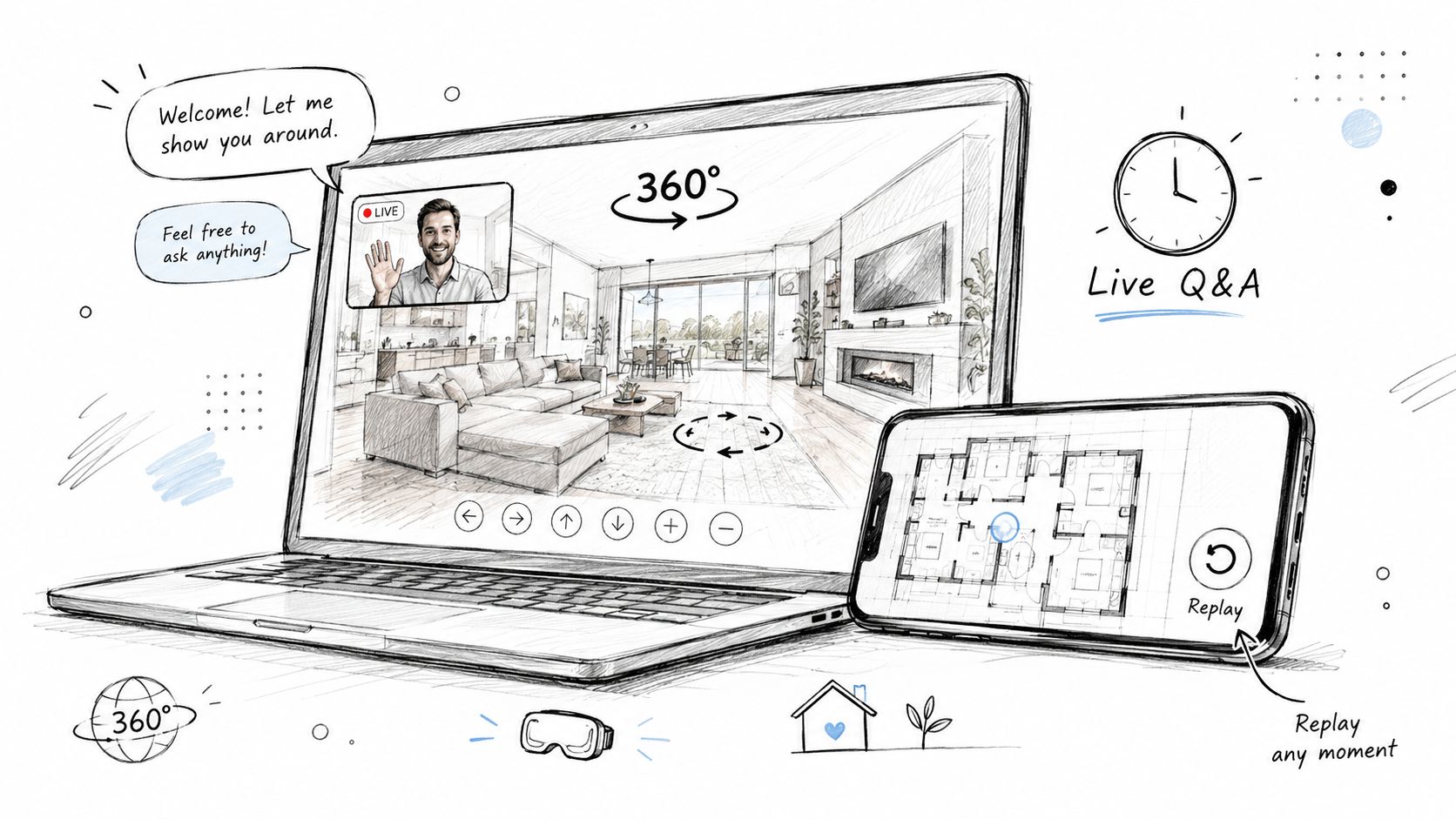
The strongest version is simple to run and easy to reuse. Schedule the live Q&A 48 hours in advance, test audio and video from inside the property, and keep a short list of property facts and neighborhood details in front of you while you're live. A team can run the same structure every week, while a solo agent can pair a Facebook Live walk-through with follow-up virtual consults booked by email. If you want a faster way to turn that footage into promotion, promote your open house with AI and reuse the tour language across your listing description, email reminder, and social captions.
Practical rule: Don't use the live session to ramble. Use it to answer what buyers actually ask, then save those questions for your next listing's promo copy.
2. Themed Open House Events with Staging Concepts
Generic staging makes a home look finished. Themed staging makes it easier for buyers to understand how the space lives. A three-bedroom listing can show a home office, an entertaining kitchen, and a guest suite concept all in one event, while a condo might shift between a work-from-home setup and an evening hosting layout on alternate weekends.
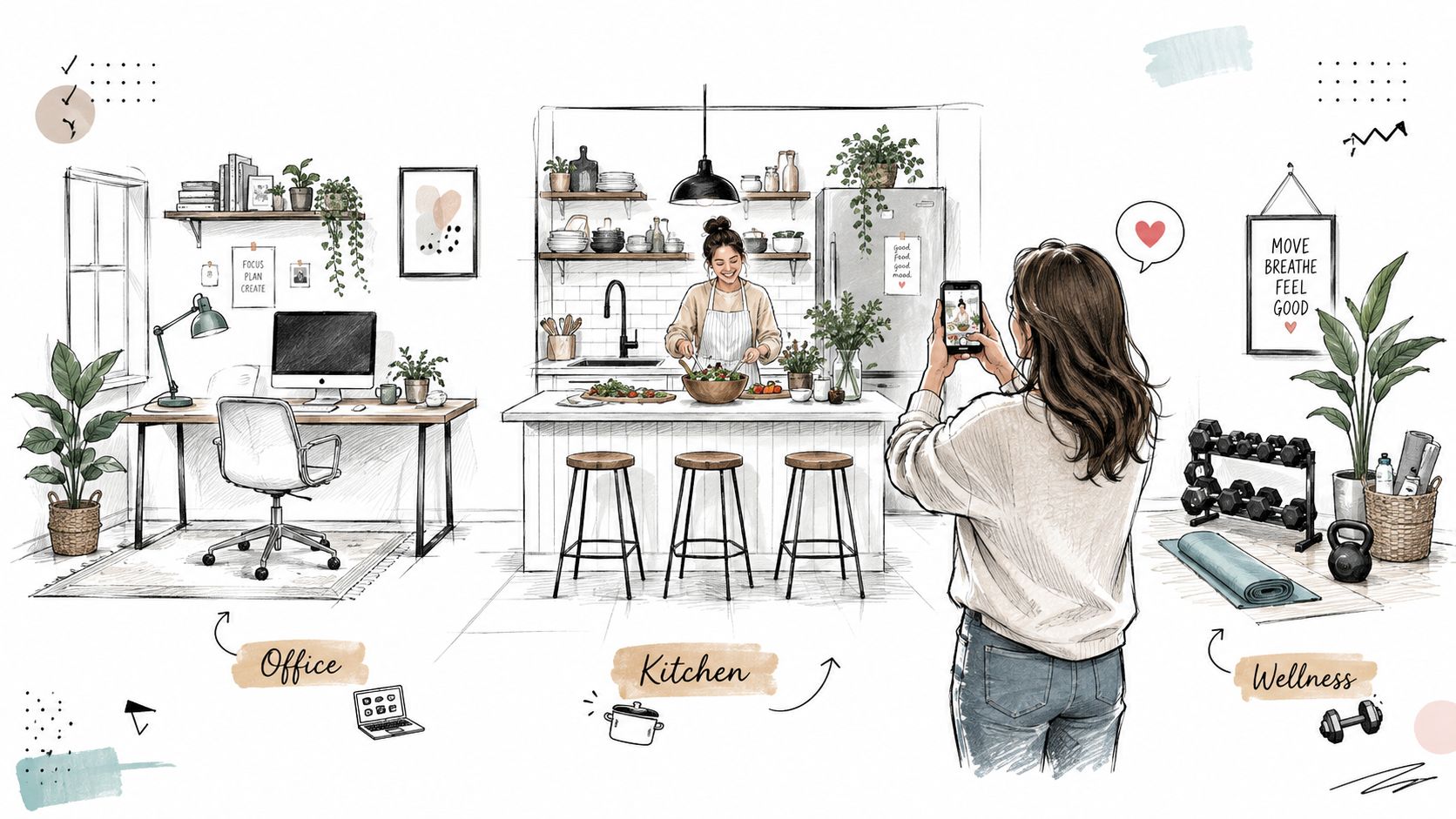
The key is to match the theme to the actual floor plan, not to a fantasy version of the home. Rent neutral, high-quality furnishings, hire a photographer to capture each setup, and post behind-the-scenes staging content a few days before the event. When you're writing the listing copy or social caption, keep the language disciplined. NAR advises agents to describe a home by focusing on three special features and not to force extra selling points (NAR open house guidance). That same rule keeps themed events from sounding gimmicky.
Use the materials you create everywhere. A clean set of themed photos can feed MLS, email, and social posts, and listing description examples that sell can help you keep the copy focused on the actual room uses instead of empty hype.
3. Neighborhood Expert Positioning with Walking Tours
An open house does not need to end at the curb. A short walking tour of the immediate area gives buyers context and gives you a practical way to show local knowledge without turning the event into a scripted pitch. Lead attendees past nearby amenities, transit access, parks, or shopping, then explain how the property fits into the block, not just the house.
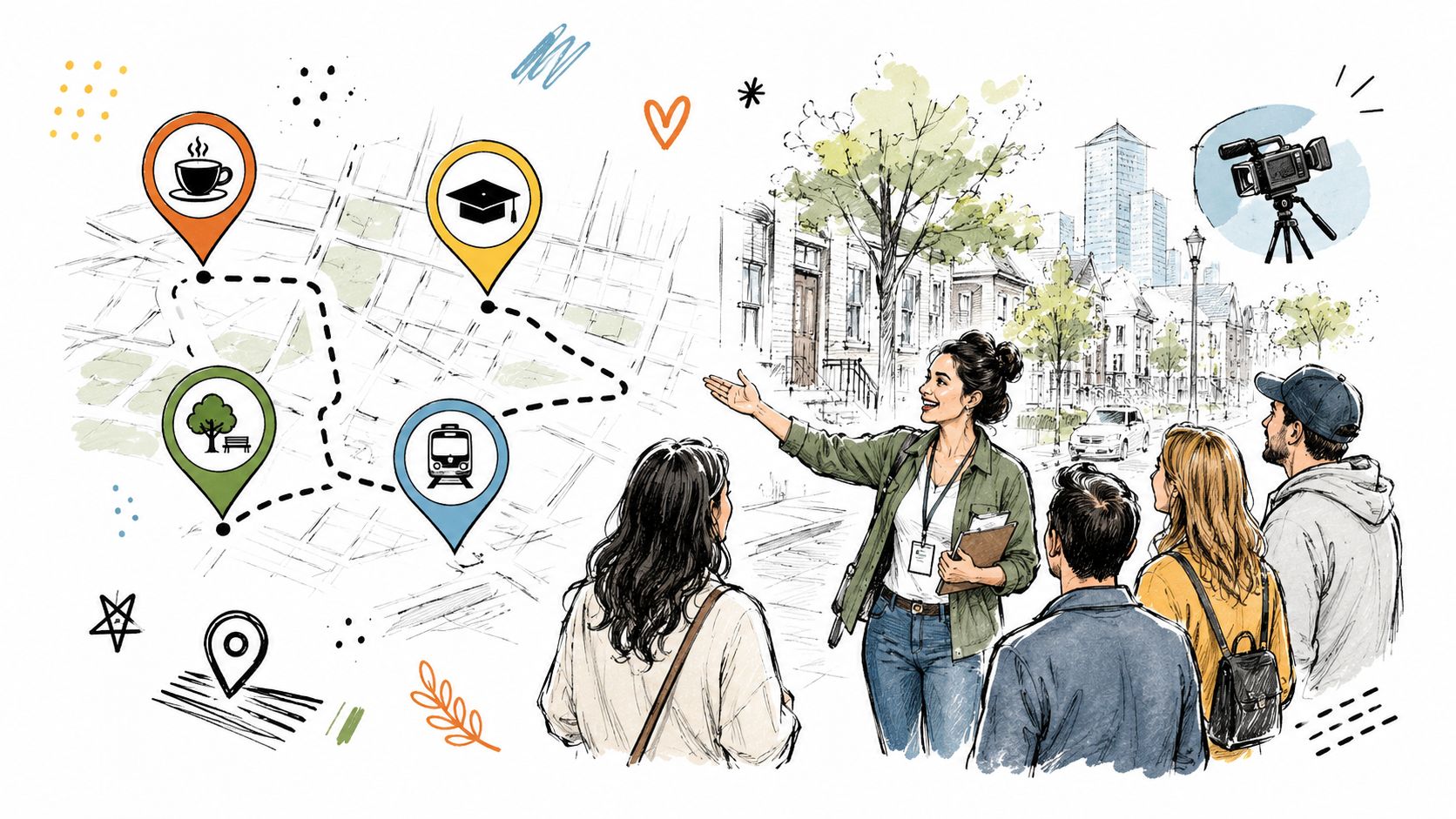
The route needs to be planned before anyone arrives. Choose two or three tour times during the open house window, identify four or five stops within a reasonable walking radius, and bring a printed map or QR code with local resources. Keep the commentary objective. Stick to commute access, nearby services, and publicly available school and transit information, and avoid subjective claims about who the area is “for.” That keeps the conversation compliant and more credible.
The walk also gives you material you can reuse later. Record one clean pass through the route, then cut it into short clips for a “Know Your Neighborhood” series. If you are coordinating multiple stops or trying to map the route efficiently, this route-planning guide for field teams is a useful reference for organizing the logistics.
4. Pre-Qualified Buyer Speed Networking Format
A traditional open house invites everyone at once. A speed-networking format lets you turn the event into a series of focused buyer conversations. Pre-register buyers, book 15-minute slots, and use each visit to walk the property, ask a few needs-based questions, and capture the next step while the conversation is still warm.
The best use case is a listing that attracts serious prospects but gets bogged down by casual traffic. A team can offer several two-hour windows with pre-scheduled slots, while a luxury listing can use longer appointments and provide a custom property packet before the buyer arrives. The advantage isn't just efficiency. You learn who the buyer is, how they're shopping, and whether they already have representation.
Serious buyers don't need a crowd around them. They need space, clear information, and a fast follow-up path.
The process should feel organized, not exclusive. Promote the registration link five to seven days out, set a deadline the day before, and collect useful details such as timeline, price range, and whether the buyer is working with an agent. Redfin recommends collecting attendee contact information with permission and sending a personalized thank-you email shortly after the event, then following up with what visitors liked or disliked (Redfin open house ideas). That follows naturally here because each appointment gives you enough context to make the follow-up specific, not generic.
5. Digital Contest and Giveaway Mechanics
A giveaway can drive attendance, but only if it feels relevant to the buying journey. The strongest prizes are tied to moving, home setup, or local services, not random swag that has nothing to do with the event. Think in terms of helpful utility, not gimmicks.
Keep the entry process simple. One QR code, one sign-in flow, and one clear prize are easier to manage than a complicated social scavenger hunt. If you want to add a referral layer, make sure the rules are spelled out clearly and that you've checked local contest and sweepstakes rules with an attorney before launch. For compliance, avoid language that points to protected classes or implies the giveaway is meant for a specific demographic.
A clean version looks like this:
- Entry at sign-in: One registration form, one clear explanation of the prize.
- Optional social action: A share or follow that doesn't interfere with the visit.
- Fast announcement: Pick a winner within a few days and post the result.
- Follow-up list: Send the same thank-you note to everyone who registered.
Use the giveaway to start a nurture sequence, not to create one-time traffic. The point is to collect permission, build familiarity, and keep the open house top of mind after the weekend ends.
6. Influencer and Local Personality Collaboration Events
A local creator can bring a new audience into the room, but the collaboration has to fit the property. Interior design creators, lifestyle hosts, and recognized community figures work best when the home has something visually distinctive to show. Their role isn't to replace the agent. It's to amplify the experience with a point of view that their followers already trust.
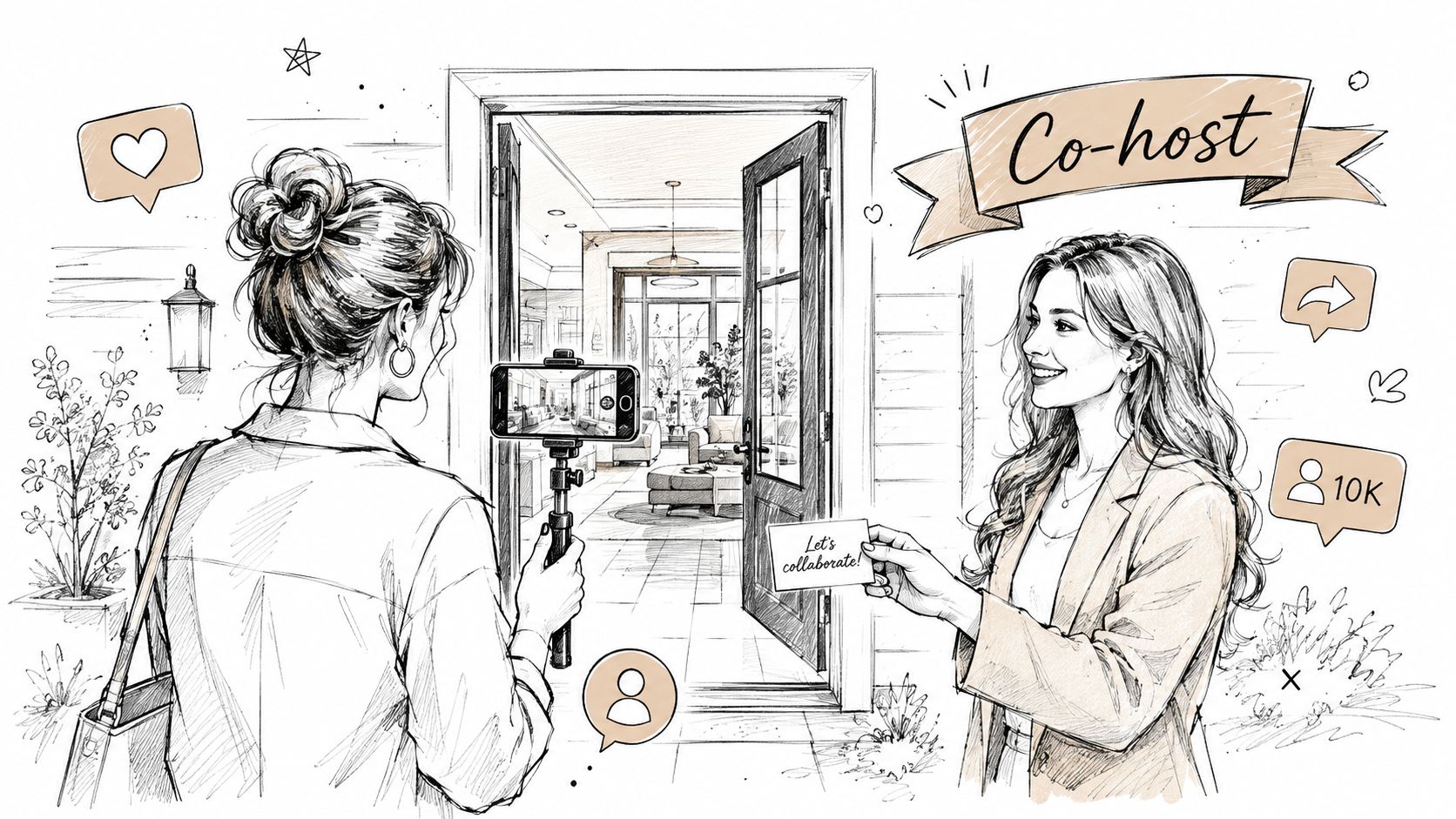
The deal should be clear before anyone shows up. Set expectations for the content pieces, posting timeline, and what the creator will tag. Bring them in early enough to brief them on the property's actual features, then give them enough structure to talk about the home without sounding scripted. If you're considering creator collaboration more broadly, the examples in these TikTok collaboration ideas can help you think through the audience fit and content angle.
One thing to avoid is turning the event into a personality show that overshadows the listing. The property still has to carry the story. Your job is to make sure the creator's audience sees a home worth visiting, not just a social post worth liking. Repost quickly, reply to comments while the event is fresh, and use the creator's content as a reminder to your own database that the listing is active and worth a look.
7. Mobile Open House with Route Optimization
If you have several listings in the same area, stop running each open house like a separate stop. Group them into a neighborhood route so buyers can compare homes without spending their afternoon resetting directions, parking, and timing. The format saves buyers time, and it helps you present the area as a coherent pocket of inventory instead of a stack of disconnected showings.
The logistics need to be tight. Keep the homes close enough for a short drive, coordinate the schedule so each agent is available, and hand out a branded map that includes the route, parking notes, and addresses. Use the same yard signs and directional arrows at every stop so the whole event feels planned, not patched together. For teams that are building this process, this guide to mapping routes for field teams is a practical starting point.
A route format also gives you cleaner follow-up. Collect contact information at the first property, then use it to reconnect around the full set of homes later in the day, based on what visitors saw and liked. That way, the event is doing more than promoting one listing, it is supporting the surrounding inventory and giving you a usable touchpoint for future marketing.
Best use case: clustered listings, new construction in a subdivision, or a solo agent who needs each open house to support nearby inventory as well.
If route planning is new to your team, a mapping tool can remove a lot of friction from the process. The workflow in the guide above is a useful template for arranging stops, reducing dead time between properties, and keeping the route easy to follow for both buyers and agents.
8. Service Partner and Vendor Showcase Integration
Open houses become more useful when they solve adjacent problems, not just property questions. Bring in a lender, inspector, insurance agent, mover, or contractor, then let each vendor answer the questions buyers are already thinking about. That turns a showing into a resource hub and gives visitors a reason to stay longer.
The clean version is curated, not crowded. Limit the room to a few credible partners so the event still feels like an open house, not a trade fair. Give each vendor a defined space, brief them on the property, and make sure they know who the likely buyer is. If the listing has renovation potential, a contractor or designer can be a stronger fit than another generic booth.
A vendor station also supports your follow-up. You can send attendees a short resource guide afterward, along with the vendor contact details they asked for. That gives you a permission-based reason to reconnect without sounding repetitive.
Practical rule: If a vendor can't answer a buyer's next-step question in plain language, they don't belong at the table.
This format fits especially well when you're trying to show that you understand the transaction beyond the front porch. Buyers remember the agent who made the process feel more navigable, and vendors appreciate the exposure when the setup is handled professionally.
9. Multimedia Content Production During Event
Treat the open house like a content capture day. One well-run event can produce property walkthroughs, visitor reactions, vendor spotlights, and short clips you can reuse across social posts, email, and listing updates. That is a better use of time than trying to build fresh content from nothing after the event ends.
Plan the shoot around peak traffic, not the quiet opening or the dead stretch at the end. If you are bringing in a videographer, book that person early. If you are handling it yourself, assign one person to capture B-roll, one to manage consent, and one to keep visitor flow moving. If you want to speed up editing and repurposing, pre-production and A/V signal flow principles can help you structure the raw footage into reusable assets without turning the edit into a week-long project.
Keep the production respectful and tied to the listing experience. Ask before filming identifiable attendees, use a simple backdrop for short testimonials, and do not interrupt serious conversations just to get a clip. The goal is a useful content library, not a polished reel that gets in the way of the showing. Once you have the footage, cut it into vertical, square, and horizontal versions so one shoot can support multiple channels, and use listing video ROI tips to decide which clips deserve the most editing time.
10. Comparative Market Analysis Station with Buyer Education
Buyers walk into an open house with one question on their mind, is the price rational. A dedicated CMA station answers that question with data instead of sales pressure. Put together a simple visual that shows the property alongside recent comparable sales, then let buyers read the context for themselves.
The station works best near the entrance or another natural gathering point. Include recent comparable photos, a one-page handout, and a short verbal explanation ready to go. Use the language carefully. You're not trying to defend the price, you're showing how the property compares to recent sales and what that means for the buyer's decision-making.
According to NAR's 2015 Profile of Home Buyers and Sellers, 48% of all buyers used an open house as a source in their home-search process, and 92% said open houses were at least “somewhat useful” (NAR open house media hooks). That's exactly why a CMA station matters. Visitors aren't just browsing, they're evaluating, and the agent who can explain the market clearly earns more credibility than the agent who only repeats the listing remarks.
Use the handout after the event too. A buyer who takes the sheet home may not be ready today, but the data keeps working after the door closes. It also gives you a clean reason to follow up with something useful, not just a reminder that you met.
10 Open House Ideas Comparison
| Item | Implementation Complexity 🔄 | Resource Requirements ⚡ | Expected Outcomes 📊 | Ideal Use Cases 💡 | Key Advantages ⭐ |
|---|---|---|---|---|---|
| Virtual Tour with Live Q&A Integration | 🔄 Medium–High: platform setup, livestream coordination | ⚡ Moderate–High: 3D tour platform, reliable internet, streaming tools, agent time | 📊 Increased remote attendance, engagement metrics, extended discovery | 💡 Remote buyers, cross-time-zone reach, tech-savvy markets | ⭐ 24/7 access, real-time answers, reusable AI-readable assets |
| Themed Open House Events with Staging Concepts | 🔄 Medium: staging design and turnover logistics | ⚡ Moderate–High: staging rental, professional photography, setup crew | 📊 Longer visitor dwell time, highly shareable social content | 💡 Design-forward homes, lifestyle marketing, photo-centric listings | ⭐ Distinct branding, multiple visual assets, better buyer visualization |
| Neighborhood Expert Positioning with Walking Tours | 🔄 Low–Medium: route planning, safety prep | ⚡ Low: agent time, maps/QR codes, optional recording gear | 📊 Stronger local credibility, improved context for buyers, local content | 💡 Walkable neighborhoods, new-to-area buyers, community-focused listings | ⭐ Builds trust, highlights amenities, generates neighborhood content |
| Pre-Qualified Buyer Speed Networking Format | 🔄 Medium: registration systems and slot management | ⚡ Low–Moderate: scheduling platform, CRM integration, dedicated agent time | 📊 Higher-quality leads, tailored conversations, fewer casual visitors | 💡 Competitive markets, luxury listings, time-efficient buyer vetting | ⭐ Filters motivated buyers, enables personalized follow-up |
| Digital Contest and Giveaway Mechanics | 🔄 Low–Medium: rules, compliance and tracking | ⚡ Low–Moderate: prize budget, QR/entry setup, legal review | 📊 Increased attendance and social reach; risk of lower-quality leads | 💡 New-listing buzz, email list growth, community engagement campaigns | ⭐ Amplifies reach, builds email list, encourages referrals |
| Influencer and Local Personality Collaboration Events | 🔄 Medium–High: vetting, contracts, content coordination | ⚡ Moderate–High: influencer fees/time, content production coordination | 📊 Expanded audience, professional content, third-party validation | 💡 Aspirational/luxury properties, design-led listings, social-first campaigns | ⭐ Access to new audiences, authentic endorsements, high-quality content |
| Mobile Open House with Route Optimization | 🔄 High: multi-property coordination and timing logistics | ⚡ Moderate: multiple agents, printed/digital route maps, signage | 📊 Higher combined foot traffic, neighborhood authority positioning | 💡 Multiple nearby listings, new developments, buyer comparison events | ⭐ Increases portfolio visibility, enables direct property comparisons |
| Service Partner and Vendor Showcase Integration | 🔄 High: vendor recruitment, logistics, liability management | ⚡ Moderate: vendor coordination, materials, networking efforts | 📊 Broader attendance, added buyer value, new referral streams | 💡 Buyer education days, first-time buyer events, resource-focused open houses | ⭐ One-stop resources for buyers, strengthens vendor referral network |
| Multimedia Content Production During Event | 🔄 Medium–High: shoot coordination, releases, post-production | ⚡ High: videographer/photographer fees, editing time, releases | 📊 Large library of reusable, high-quality marketing assets | 💡 Content-driven marketing, high-value listings, long-term campaigns | ⭐ Professional assets, social proof, efficient multi-format content |
| Comparative Market Analysis Station with Buyer Education | 🔄 Low–Medium: CMA preparation and display setup | ⚡ Low–Moderate: MLS access, print/digital materials | 📊 Educated buyers, fewer pricing objections, increased credibility | 💡 Market-sensitive listings, negotiations-focused showings | ⭐ Demonstrates expertise, provides transparent pricing rationale |
Turn Ideas Into Action with Smarter Systems
Good open house ideas only matter if you can execute them without burning half your week. The winning pattern is the same across every format, promote early, make the on-site experience intentional, and follow up fast with something relevant. That's hard to do consistently if you're writing every caption, flyer, and follow-up note from scratch.
Purpose-built tools make a real difference. Generic AI can help you draft words, but real estate-specific systems are better at keeping your materials aligned with listing language, social content, and Fair Housing boundaries. ListingBooster.ai is built to generate listing descriptions, open house captions, and social content for agents, teams, and brokerages, so you can turn one property into a consistent marketing set without rebuilding everything manually.
The bigger advantage is consistency. If your open house promotion, listing description, and follow-up all sound like they came from the same person, your brand feels stronger and your process gets easier to repeat. That matters whether you're a solo agent trying to stay visible, a team trying to keep voice aligned, or a brokerage trying to scale content without creating compliance headaches.
Your best next step is to pick one open house format that fits your current listing pipeline and build a repeatable workflow around it. Use one event to test the promotion, the in-person experience, and the follow-up sequence, then refine it before the next weekend.
If you want a faster way to create Fair Housing-aware open house promotion, listing copy, and follow-up content, visit ListingBooster.ai. It's built for agents who need repeatable marketing systems, not one-off templates, and it can help you turn your next open house into a cleaner, more consistent campaign.
Walk In With the Campaign Already Built
Listing copy, social posts, sourced Market Insights, growth scheduling, and direct publishing after approval from one real-estate-specific system. 25 free credits to start.
Related Posts
 Uncategorized
Real Estate Content Marketing: The 2026 Playbook
Listings with video can generate 49% more qualified leads, according to a 2026 real estate digital marketing roundup. That figure changes the question. Real estate content marketing isn't about how often you post. It's about whether your listing, expertise, and local knowledge can be found, understood, and cited by people and by the AI tools […]
 Uncategorized
AI for Real Estate Marketing: A Practical Playbook
A new listing goes live on Tuesday morning. You write the description from memory, schedule three social posts, answer showing requests, and move on to the next client task. By afternoon, the listing has plenty of activity on your side of the business, but the phone still isn't producing the conversations you expected. That gap […]
 Uncategorized
What Is IDX and Why It Still Matters for Real Estate
A new agent usually hears “IDX” during a brokerage onboarding call, nods along, and hopes nobody asks for a definition. Then the questions arrive: Why are listings appearing on the website? Who controls the data? Why did a property remain visible after its status changed? And will the same pages be readable by ChatGPT, Perplexity, […]