LinkedIn for Real Estate Agents: 10 Strategies for 2026
Most agents already know the pattern. A listing goes live, you push it to Instagram, maybe Facebook, maybe email, and LinkedIn gets an afterthought version of the same post. Then nothing meaningful happens there, so the platform gets written off as a resume site.
That's a mistake. More than half of real estate agents globally already use LinkedIn for business, which means this isn't an experimental channel anymore. It's a working part of the marketing mix for the industry, and LinkedIn for real estate agents has become especially useful when the goal is authority, not just exposure. It also produces a 0.77% conversion rate for lead generation, compared with 0.69% for Facebook and 0.69% for Twitter, according to Paperless Pipeline's LinkedIn real estate marketing breakdown.
Top producers aren't treating LinkedIn like a listing dump. They're using it to attract investors, relocation buyers, referral partners, and sellers who want someone who can explain the market clearly. If you want a practical framework instead of generic “post more” advice, start with these ten moves. For a broader platform overview, review this real estate LinkedIn marketing guide.
1. Market Commentary Posts

Most agents post inventory photos. Serious prospects pay attention to interpretation. A clean market commentary post does more for your authority than five “just listed” graphics because it shows you can read conditions, not just market a property.
A useful post sounds like this: “Inventory is building in our submarket, price reductions are showing up on stale listings, and sellers who still price off spring comps are losing their bargaining power. The opportunity right now is for prepared buyers and realistic sellers.” That's the voice people remember.
What to include
Use local data you can explain in plain English. Mention shifts in inventory, days on market, pricing pressure, negotiation posture, or differences between property types. Then tell the reader what the numbers mean for timing, pricing, or offer strategy.
Practical rule: Data without interpretation is noise. Your read on the market is the product.
A strong cadence is monthly or quarterly. If you want a faster system, ListingBooster.ai works well here because it's built for real estate content, not generic copy generation, and a structured real estate market update template makes it easier to publish consistently without sounding repetitive.
2. Investor-Focused Content
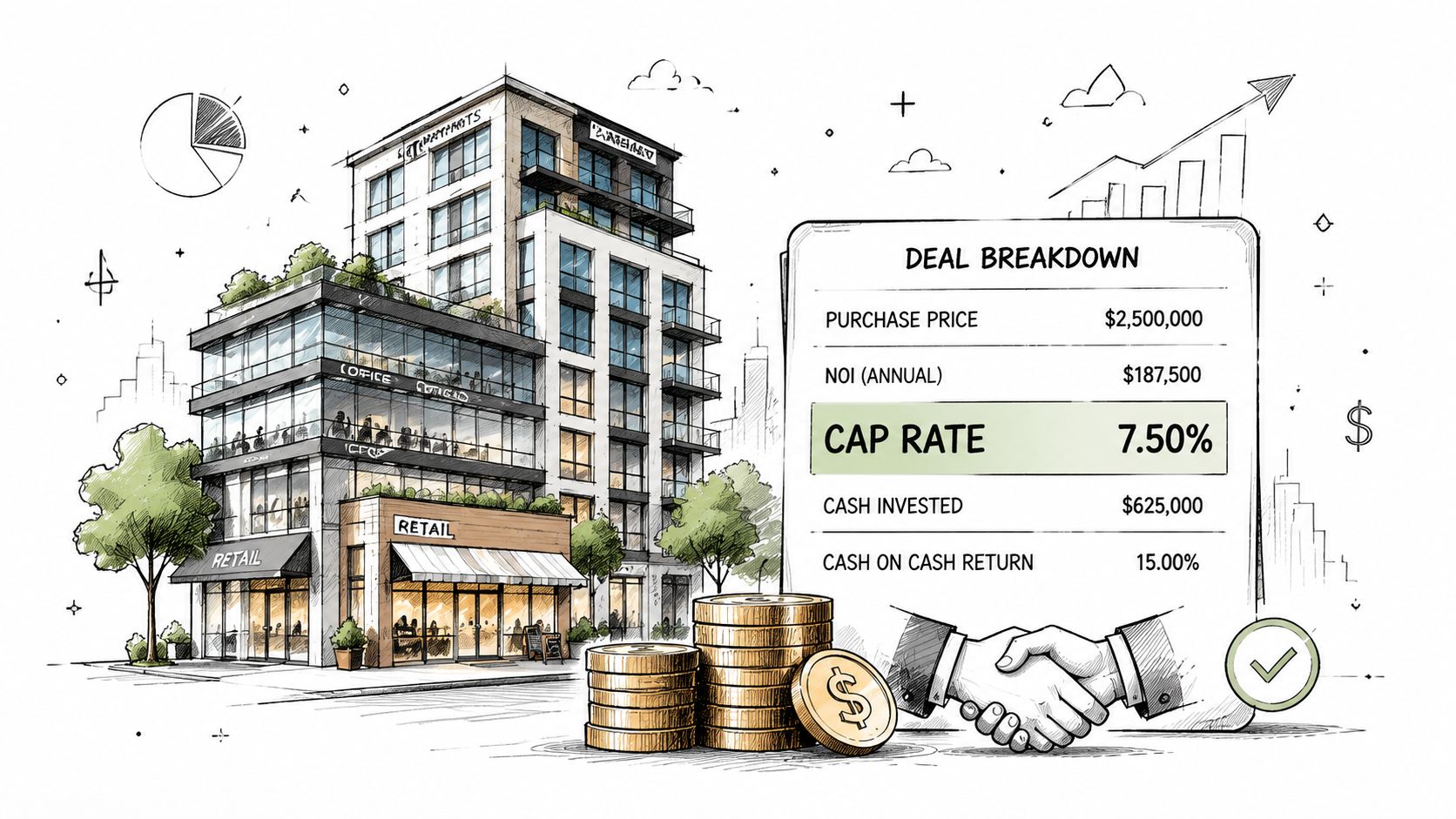
Investors don't care that you had a busy weekend of showings. They care whether you understand deal structure, risk, and local conditions that affect return. If you want investor attention on LinkedIn, speak their language.
LinkedIn converts visitors to leads at roughly 2.74%, compared with 0.77% for Facebook and 0.69% for Twitter, according to Cleverly's breakdown of LinkedIn for real estate. That advantage matters when you're trying to reach a smaller, more serious audience such as local investors, syndicators, and owners looking for a second acquisition this year.
What works with investors
A good post might break down why a small multifamily asset drew attention, how a value-add angle changed the conversation, or what local rent pressure means for underwriting discipline. Keep it practical. Avoid chest-thumping and avoid pretending every property is an “amazing opportunity.”
- Explain trade-offs: Compare stability versus upside, not just upside.
- Use anonymized deal lessons: Share what made a deal pencil or fall apart.
- Stay analytical: Investors respect clear thinking more than polished branding.
The biggest mistake is posting residential lifestyle fluff and expecting investor engagement. The fix is simple. Publish market observations, financing context, zoning changes, inventory pressure, and deal lessons that show you can help someone make a sharper decision.
3. Relocation Intelligence Posts

Relocation content is one of the most underused plays on LinkedIn. Most agents stop at “network with professionals.” That's too broad to produce serious business.
The sharper move is a relocation funnel built around specific roles. Search for People Ops, Talent, HR, and C-level contacts at companies with hiring momentum in your city. Then post content that helps them understand the market their employees are moving into. That underserved workflow is outlined in Melanie Hoole's LinkedIn article on why agents can't ignore the platform.
A better relocation angle
A strong relocation post doesn't just mention that people are moving in. It gives useful context. Think commute patterns, housing stock by price band, trade-offs between older housing and new construction, or what a fast move timeline changes in negotiation strategy.
If your relocation post reads like a tourism brochure, it won't convert. If it reads like local intelligence, it will start conversations.
Keep Fair Housing in mind here. Describe neighborhoods and locations by housing style, transit access, lot size, building age, commercial access, and commute convenience. Don't describe who a place is “for.”
ListingBooster.ai can help produce relocation guides and recurring newcomer posts in a consistent voice, which is useful when your team wants to stay visible without rewriting the same city explainer every month.
4. Professional Milestone and Achievement Posts
This content type gets abused, but it still works when handled well. The bad version is self-congratulatory. The useful version turns a milestone into evidence of competence.
“Honored to be recognized” doesn't move many prospects. “Completed advanced negotiation training, and here's how it changes the way I advise sellers facing inspection concessions” is better. It shows growth and connects the achievement to client value.
How to post wins without sounding needy
Tie every milestone to a lesson, a process improvement, or a client outcome. If you closed a difficult transaction, explain what made it difficult and what you learned. If your team earned an award, say what standards or systems produced it.
A few examples that work:
- Certification post: Explain the skill you gained and where it applies.
- Closing milestone: Share a pattern you're seeing across recent transactions.
- Team award: Connect recognition to consistency, service, or execution.
This is also where many residential agents miss an opportunity on LinkedIn. Posts that break down a problem, your approach, and the result tend to be more useful than simple celebration posts, especially for residential business. That gap is discussed well in HousingWire's take on LinkedIn for real estate.
5. Team and Brokerage Culture Posts
Culture posts aren't just recruiting content. Done right, they tell prospects how your operation works. Buyers and sellers may not care about your office lunch. They do care that your transaction coordinator catches issues early, your listing process is organized, and your team communicates well.
That's the frame. Show the system, not just the smiles.
What culture content should prove
Introduce the people behind the service. Spotlight your operations lead, showing coordinator, marketing support, or broker support staff. Explain how each role helps keep timelines moving, marketing consistent, and details from slipping.
- Show process: “Our listing prep meeting covers pricing, media, staging notes, and launch sequencing.”
- Highlight collaboration: “Our TC and lender communication reduces last-minute surprises.”
- Keep it professional: Community involvement is fine, but link it back to local knowledge and accountability.
For teams and brokerages, ListingBooster.ai is useful because it helps keep multiple agents aligned on tone and compliance. Generic AI tools can produce copy quickly, but they usually need heavier editing to sound like a real real estate brand.
6. Profile Optimization for LinkedIn Searchability
A weak profile wastes good content. If someone sees your post, clicks through, and lands on a headline that says only “Realtor at XYZ Realty,” you've thrown away the second impression.
Your profile should answer three questions fast. What market do you serve, what kind of client do you help, and what expertise do you bring? If you work with relocation buyers, investors, or move-up sellers, say that plainly.
Fix the profile first
Write a headline with actual positioning. Use your summary to explain your process, the kind of guidance you provide, and the topics you're known for. Add a direct next step such as booking a consultation or requesting a market conversation.
A strong profile usually includes:
- Clear headline: Market, specialty, and value proposition.
- Focused summary: What you do differently and how you advise.
- Featured proof: Market reports, posts, media, or helpful resources.
- Specific CTA: Message, calendar link, or resource request.
If you're thinking beyond LinkedIn itself, this also matters for discovery in AI-driven search. A practical primer on that is this guide to AI search optimization for real estate agents. ListingBooster.ai fits naturally here because it's purpose-built to help agents produce authority content that reinforces those profile claims.
7. Strategic Networking and Connection Outreach
LinkedIn limits accounts to 100 connection requests per week, which works out to roughly 20 per day, and the average acceptance rate is 25%, according to this LinkedIn outreach breakdown on YouTube. That constraint is useful because it forces discipline. Mass outreach was never the best play anyway.
Treat connection requests like introductions, not prospecting blasts. If you only have so many attempts each week, use them on people who fit your business. Think lenders, attorneys, builders, HR leaders, wealth advisors, past clients, feeder-market agents, and local operators who touch housing decisions.
A smarter outreach sequence
First, identify the people who matter. Then engage with their content before you ask for anything. When you send a request, mention something specific. A shared market, a mutual contact, a recent post, or a common client type.
Field note: The point of LinkedIn outreach isn't immediate buyer conversion. It's building a network of professional relationships that compounds over time.
Good outreach is short and specific. “Saw your post on expansion hiring in the area. I advise a lot of incoming buyers and thought it made sense to connect.” That's enough. Don't pitch listings to someone who hasn't accepted your request yet.
8. Engagement Strategy and Comment Tactics
If you don't want to post every day, comment better. LinkedIn rewards useful participation, and comments are one of the fastest ways to stay visible to referral partners and prospects without creating a full original post.
Most agents waste this by writing “Great post” on industry content. That adds nothing. A real comment introduces a perspective, asks a relevant question, or adds local context.
How to comment like a pro
Read the post, then add one layer. If a lender posts about rate sensitivity, share what you're seeing in offer behavior. If a broker posts market inventory observations, add a submarket nuance. If an investor posts about multifamily demand, mention a trend in smaller assets or specific buyer hesitation.
- Add context: “We're seeing the same issue, especially on listings that missed the initial pricing window.”
- Ask a real question: “Are you seeing this across the metro or mostly in newer inventory?”
- Use comments to signal expertise: Keep it educational, not promotional.
This approach works because it puts your name in front of the right people with a useful point of view. Over time, that's how LinkedIn for real estate agents becomes an authority channel instead of another posting obligation.
9. Analytics Tracking and Content Performance Optimization
A lot of agents say LinkedIn “works” or “doesn't work” based on vibes. That's lazy marketing. Review what your audience responds to.
You don't need a complicated dashboard. Track which posts generate profile views, quality comments, direct messages, and follow-up conversations. Separate vanity response from business response. A post with fewer likes can still be more valuable if it draws the right people.
What to review each month
Look at content by category, not just individual post performance. Did market commentary drive consultation conversations? Did relocation posts attract HR contacts or incoming buyers? Did investor posts bring better connection requests from local operators?
A simple review process:
- Tag each post by pillar: market commentary, investor, relocation, milestone, team.
- Note the outcome: profile clicks, direct messages, intros, or calls.
- Cut weak formats: if listing reposts keep underperforming, stop forcing them.
- Repeat strong angles: especially posts that trigger thoughtful comments from prospects.
ListingBooster.ai is helpful here because it lets you build around repeatable content pillars instead of writing every post from scratch. That makes optimization easier. You can compare formats and topics without reinventing your workflow every week.
10. Tactical Posting Calendar and Content Pillars
Consistency beats bursts. Agents who only post when they have a new listing or a closing never build momentum. Their profile looks active for a day, then quiet again.
The fix is a simple calendar built around a few repeatable pillars. For most agents, that means market commentary, investor insight, relocation intelligence, professional milestones, and team credibility. Those themes position you as an advisor with a point of view, not just someone promoting inventory.
A realistic monthly rhythm
One month might include two market posts, one investor post, one relocation post, one milestone post, and several comment sessions on other people's content. That's enough to stay visible if the content is sharp.
Build your calendar around what you want to be known for, not what happens to land in your pipeline that week.
Leave room for timely commentary when local news breaks, but don't run your whole LinkedIn presence ad hoc. A structured real estate social media content calendar keeps the channel moving, and ListingBooster.ai is especially useful here because it's designed to generate real-estate-specific content pillars instead of generic business posts.
10-Point LinkedIn Strategy Comparison for Real Estate Agents
| Item | Implementation Complexity 🔄 | Resource Requirements ⚡ | Expected Outcomes 📊 | Ideal Use Cases 💡 | Key Advantages ⭐ |
|---|---|---|---|---|---|
| Market Commentary Posts: Position Yourself as a Local Expert | Moderate–High, needs data sourcing and analysis | Access to MLS/local data, analytics time, infographic design | High authority and engagement; attracts serious buyers/sellers/investors | Monthly/quarterly market updates; agents positioning as analysts | Builds credibility; evergreen, high-performing on LinkedIn |
| Investor-Focused Content: Unlock a High-Intent Audience | High, requires financial and deal analysis skills | Deal metrics, underwriting tools, investor network | High-value, repeat transactions; strong referral potential | Agents targeting investors, multi‑unit/commercial deals | Attracts larger deals and institutional interest |
| Relocation Intelligence Posts: Tap Corporate & Transition Markets | Moderate, research on corporate moves and locales | Economic/HR alerts, cost‑of‑living data, employer contacts | Attracts incoming buyers with defined timelines and budgets | Markets with corporate growth; relocation services | Access to groups of buyers and corporate referrals |
| Professional Milestone & Achievement Posts: Build Personal Brand Authority | Low, straightforward content creation | Internal metrics, photos, short narratives | Immediate social proof and trust; boosts engagement | Personal branding and trust-building for agents | Fast credibility gains; algorithm-friendly content |
| Team & Brokerage Culture Posts: Build Organizational Brand Authority | Moderate, coordination across team members | Participation from staff, photography/video, approvals | Improves talent attraction and client confidence | Brokerages/teams hiring or showcasing support systems | Attracts agents, enhances organizational trust |
| Profile Optimization for LinkedIn Searchability: Make Yourself Discoverable | Moderate, structured profile work and keywords | Time for copy, headshot, client recommendations | Better discoverability and conversion from searches | Foundational for all agents seeking leads online | Long-term organic visibility and trust signals |
| Strategic Networking & Connection Outreach: Build Relationships Before You Need Them | Moderate, personalized and consistent outreach | Time, CRM/relationship reminders, tailored messages | Higher-quality referrals and warm introductions over time | Building referral partnerships and referral networks | Higher conversion rates than cold outreach |
| Engagement Strategy & Comment Tactics: Build Visibility Without Posting Daily | Low, consistent, short-form activity | 10–15 minutes/day, attention to key posts | Increased visibility and relationship building with low effort | Agents short on time who want reach without posting | High reach per time invested; positions expertise subtly |
| Analytics Tracking & Content Performance Optimization: Double Down on What Works | Moderate, ongoing tracking and analysis | LinkedIn analytics, spreadsheet or tool, time for reviews | Data-driven improvements; higher ROI from content | Agents scaling content or optimizing strategy | Eliminates guesswork; focuses resources on winners |
| Tactical Posting Calendar & Content Pillars: Stay Consistent Without Scrambling | Moderate, upfront planning, adaptable execution | Time to plan, content batch tools, optional automation | Consistent visibility and algorithmic favorability | Agents seeking regular presence and balanced messaging | Efficient batching; ensures strategic content mix |
From Plan to Action
A strong LinkedIn presence comes from two things. Clear positioning and repetition. Most agents already know what they should say on the platform. The problem is saying it consistently, in a way that sounds credible, stays compliant, and doesn't eat half the week.
That's where systems matter. LinkedIn for real estate agents works best when your content supports a real strategy: market commentary for authority, investor analysis for high-intent conversations, relocation insight for inbound professional moves, milestone posts for trust, and team content for operational credibility. Once those pillars are in place, the platform starts doing what it should. It reinforces your expertise before the first call.
For busy agents, teams, and brokerages, generic AI tools create extra editing work because they don't understand real estate nuance, Fair Housing boundaries, or the difference between a market update and a listing caption. ListingBooster.ai is a better fit because it's built specifically for real estate marketing. It helps turn one property, one market angle, or one team update into a usable content stream that stays on-brand and easier to publish at scale.
If you're building automation around your marketing workflow, these step-by-step Slack and Zapier instructions can help connect the moving parts without creating more admin work. The point isn't automation for its own sake. It's staying visible often enough that the right people already trust your name when they need an agent.
If you want a practical way to turn market updates, listing launches, relocation insights, and authority posts into a consistent LinkedIn presence, ListingBooster.ai is worth a look. It's built for real estate agents, teams, and brokerages that need compliant, on-brand content without spending hours writing every post manually.
Walk In With the Campaign Already Built
Listing copy, social posts, sourced Market Insights, growth scheduling, and direct publishing after approval from one real-estate-specific system. 25 free credits to start.
Related Posts
 Uncategorized
Real Estate Content Marketing: The 2026 Playbook
Listings with video can generate 49% more qualified leads, according to a 2026 real estate digital marketing roundup. That figure changes the question. Real estate content marketing isn't about how often you post. It's about whether your listing, expertise, and local knowledge can be found, understood, and cited by people and by the AI tools […]
 Uncategorized
AI for Real Estate Marketing: A Practical Playbook
A new listing goes live on Tuesday morning. You write the description from memory, schedule three social posts, answer showing requests, and move on to the next client task. By afternoon, the listing has plenty of activity on your side of the business, but the phone still isn't producing the conversations you expected. That gap […]
 Uncategorized
What Is IDX and Why It Still Matters for Real Estate
A new agent usually hears “IDX” during a brokerage onboarding call, nods along, and hopes nobody asks for a definition. Then the questions arrive: Why are listings appearing on the website? Who controls the data? Why did a property remain visible after its status changed? And will the same pages be readable by ChatGPT, Perplexity, […]