Roomvu Reviews: What Real Estate Agents Should Know

roomvu's own review dataset says 884 verified five-star reviews and a 4.9/5 average rating, but independent platforms tell a messier story. That gap is the reason agents search for roomvu reviews before they pay for another marketing tool. If you're deciding whether to convert from a trial, the question isn't whether roomvu can produce branded video. It's whether its automation fits your workflow well enough to justify the recurring cost.
The short answer, based on the evidence, is this, roomvu is a strong fit for agents who want daily video content without filming everything themselves, but it's a weaker fit for anyone who expects deep customization, clean billing, and one platform that handles every part of their content stack. I'm going to be blunt about where it works, where it doesn't, and what I'd test before I'd hand over a card.
For context, if you're also comparing other automated content systems in adjacent verticals, resources like 24/7 lead capture for HVAC from Expressify AI show how much of the market is shifting toward always-on automation. Real estate is following the same pattern, just with more compliance pressure and more brand sensitivity.
What Roomvu Actually Is and Why Agents Are Searching for Reviews
Most agents do not buy Roomvu because they want one more app to babysit. They buy it because they need a video-first content engine that turns local market inputs, listing details, and brand elements into short-form content they can publish on a recurring basis. The company's pricing page says the Monthly plan includes daily auto-post hyper-local videos, AI portraits, AI Actor videos, Voice DNA, a lite CRM with SMS and email follow-ups, a weekly newsletter, and listing-focused formats like open house, sold, testimonial, review, and personal intro videos.
That is why people search for roomvu reviews in the middle of a trial, not after a polished demo. They are looking at the queue, checking the demands of their own calendar, and deciding whether Roomvu will reduce work or just add another subscription. The practical question is simple, does the automation fit the way they already market themselves.
What agents are really buying
Roomvu's value proposition is straightforward. It automates repetitive content production so you can stay present on social channels without recording every clip yourself. Capterra's listing also describes automated publishing, CRM, campaign management, lead capture, and social media integration, which shows the product is built for workflow, not one-off assets. For agents who want a broader automation stack, tools like the Agent Edge listing campaign engine take a more listing-centric approach, while Roomvu stays focused on keeping video content moving.
Practical rule: If your marketing falls apart when you get busy, automation is worth paying for. If you already have a strong content system, Roomvu has to fit that system, not replace it.
That is also why the search around Roomvu usually comes from active agents, not casual browsers. They are comparing the platform's promise against the demands of their own calendar.
Where Roomvu sits in the market
Roomvu makes the most sense as a recurring video engine, not as a catch-all marketing platform. If you want daily social presence with minimal filming, Roomvu deserves a hard look. If you want custom copy, authority content, and listing marketing in one workflow, you should treat Roomvu as one piece of the stack, not the whole stack.
The trade-off is clear. Roomvu helps agents publish consistently, but it does not remove the need for judgment, brand oversight, or a separate strategy for the rest of your marketing. That is the same reason some teams use a specialized system for one job and a different system for another, the same way they might use a partner like 24/7 lead capture for HVAC for always-on intake while keeping other campaigns separate.
How Roomvu's Video Engine Works Day to Day
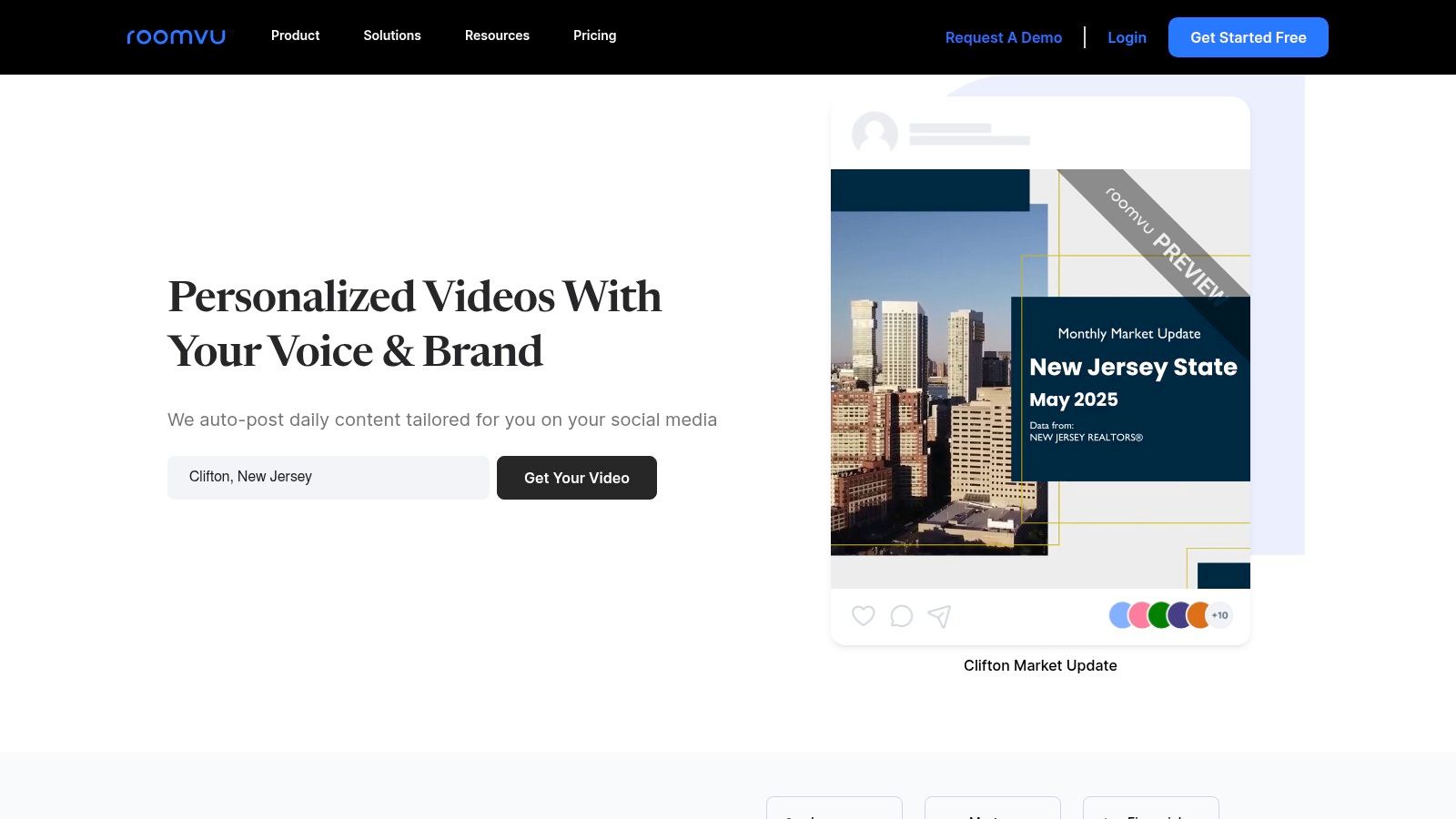
The day-to-day reality is straightforward. Roomvu's system pulls in hyperlocal content, pairs it with your brand settings or listing information, and turns it into short branded videos you can publish automatically. The time savings come from removing the grind of scripting, filming, editing, and reformatting the same idea for every channel.
That's the upside. The trade-off is that the platform assumes you're comfortable with template-driven content. If your brand voice depends on long, narrative property stories or highly customized messaging, you'll still need to intervene manually.
What the automation actually does
Voice DNA and AI Actor personalization are built to make the content feel less generic. In practice, that means the system is trying to preserve a recognizable speaking style or on-screen delivery while still automating the output. You're not starting from a blank page every time, which is the point.
A normal week with a tool like this looks pretty simple:
- Monday: Review the videos queued for the week and make sure the local topics match your market priorities.
- Midweek: Approve or lightly edit captions, intros, and any listing references that need cleanup.
- End of week: Check what published automatically and see whether the output still sounds like your brand.
- Anytime a listing changes: Update the asset details so stale content doesn't keep posting.
That's very different from shooting a fresh clip every time you need a post. It's faster, but it also narrows how much you can reshape the output after the engine has done its work.
How to judge whether it saves time
The true test is whether roomvu reduces the number of decisions you make. If you normally spend an hour deciding what to post, then another hour writing and formatting it, automation can help. If you already have a clean content calendar and a lightweight caption workflow, the savings may be smaller than the marketing copy suggests.
A good comparison point is your current daily routine, not the platform demo. If roomvu replaces a manual process you hate, it's useful. If it creates another review queue you have to babysit, the automation is doing less than advertised.
Roomvu Pricing and What Each Plan Includes
Roomvu's public pricing page puts the Monthly plan at $89.99/month and ties that price to daily auto-post hyper-local videos, AI portraits, AI Actor videos, Voice DNA, a lite CRM with SMS and email follow-ups, a weekly newsletter, and listing-focused video formats. That pricing tells you what the product is built for, an ongoing content engine, not a one-off creative tool.
Capterra presents roomvu as a feature-priced product, starting at US$39.99 per feature per month and highlighting automated publishing, CRM, campaign management, lead capture, and social media integration. That structure matters because your real spend changes based on which pieces of the stack you turn on.
Use the trial to judge the workflow, not the marketing page.
| Feature | Monthly Plan | Add-On / Higher Tier |
|---|---|---|
| Daily auto-post hyper-local videos | Included | Higher feature usage may change the mix |
| AI portraits and AI Actor videos | Included | More advanced workflow depth if you expand |
| Voice DNA | Included | Best tested during the trial |
| Lite CRM with SMS and email follow-ups | Included | May require broader setup discipline |
| Weekly newsletter | Included | Useful if you send consistently |
| Listing-focused video formats | Included | Fits agents who post around active inventory |
If you are comparing software subscriptions more broadly, it helps to check subscription rates before you commit, because content tools often look similar until you factor in usage, billing structure, and the time it takes to adopt them.
Who should test the monthly plan
A solo agent with a steady listing pipeline is the clearest fit. A small team that wants a steady posting rhythm without handing content chores to every agent also fits well. A larger brokerage needs more caution, because the more people touch the system, the more brand control you need.
Buying rule: Do not pay for automation unless you'll use the cadence it is built around. Paying for a weekly habit and using it monthly is how these tools turn into expensive clutter.
If you want a comparable pricing lens on another real estate marketing tool, the ListingBooster pricing and plans page shows how purpose-built platforms tend to package value around workflow, not just feature lists.
What Verified Agents Are Saying in Roomvu Reviews
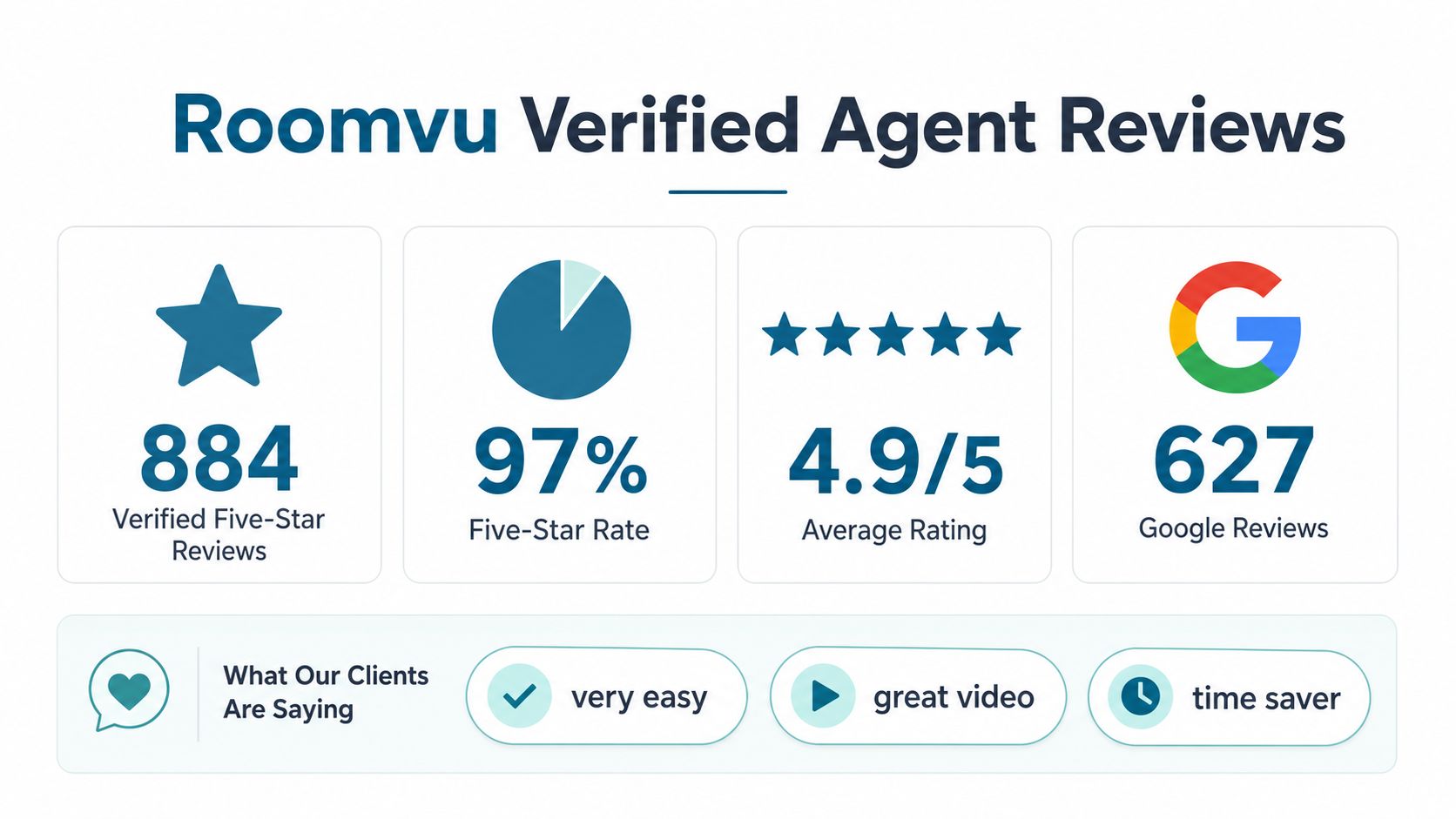
Roomvu's own review dataset is polished, and that is part of the sales pitch. The company says it has 884 verified five-star reviews, a 97% five-star rate, and an average rating of 4.9/5, drawn from Google and Trustpilot reviews written by real estate agents across North America (roomvu's review analysis). It also says 627 of those reviews came from Google, and its text analysis highlights repeated praise such as “very helpful” in 272 reviews, patient and knowledgeable support in 188 reviews, and “highly recommend” in 63 reviews.
That internal picture looks strong. Independent platforms paint a messier one. Trustpilot currently shows 248 reviews and a 4.5/5 rating, BBB's Canadian profile lists an average of 2.33/5 from 15 customer reviews and 18 total complaints in the last 3 years, Capterra's Canada listing reports 2.2/5 based on 16 reviews with only 20% recommendation sentiment, and G2 lists 11 reviews and a 4.0/5 average rating (Trustpilot roomvu profile, G2 roomvu reviews).
What the spread tells you
The gap matters more than the praise. Roomvu's strongest fans are agents who accept the automation and value the support. The lower ratings usually point to a mismatch between what buyers hoped for and what the product does.
That is a common pattern for workflow software. Some users want a hands-off publishing engine. Others want more control over every asset and get annoyed when the platform pushes them toward a fixed structure.
How I read the sentiment
I do not read the review mix as a simple yes or no. It shows that roomvu works well for one group of users, then disappoints another group that wants different editing control, more manual refinement, or smoother service handling. The public record says the product has real market visibility, but satisfaction depends on how closely the agent's process matches the automation.
Roomvu looks strongest when the user commits to the system instead of fighting it.
That is the practical takeaway. If your style is to tweak every asset by hand, the independent review scores should make you cautious. If you want steady output and can live with templated structure, the review pattern is more favorable.
Which Agent Types Roomvu Fits Best
Roomvu fits by workflow, not by personality. That is the cleanest way to judge it. The strongest match is the agent who needs a steady stream of branded video and can accept a tighter creative lane in return for speed. If your operation values output over constant customization, Roomvu deserves a look.
The solo producer
A solo producer with enough listing volume to keep content moving usually gets the most value. Roomvu helps when you are juggling showings, follow-up, and listing prep, because it removes the daily question of what to post. If you dislike sitting down to record fresh content every time, the automation has a real job to do.
The team lead
A team lead can benefit too, but only if the team has a clear brand standard. The platform works best when one person sets the content rules and everyone else follows them. Without that discipline, you end up with repetitive posts wearing slightly different voices.
The compliance-heavy brokerage
Brokerages should be more selective. The platform can support a consistent content cadence, but it also creates more oversight work if multiple agents are publishing under one brand. The more people who can touch the output, the more important review, approval, and messaging consistency become.
The key question is whether your operation needs video volume more than deep customization.
If your marketing is already organized and you mainly need another content source, Roomvu can fit. If your agents need one system for listing copy, authority content, and social posting, the stack gets crowded fast. For a broader comparison, best AI tools for real estate agents is the better reference point than generic software lists.
Practical rule: The more unique your brand voice, the less you should rely on templated video alone.
That does not make Roomvu bad. It makes it specific.
Common Complaints and How to Prevent Them
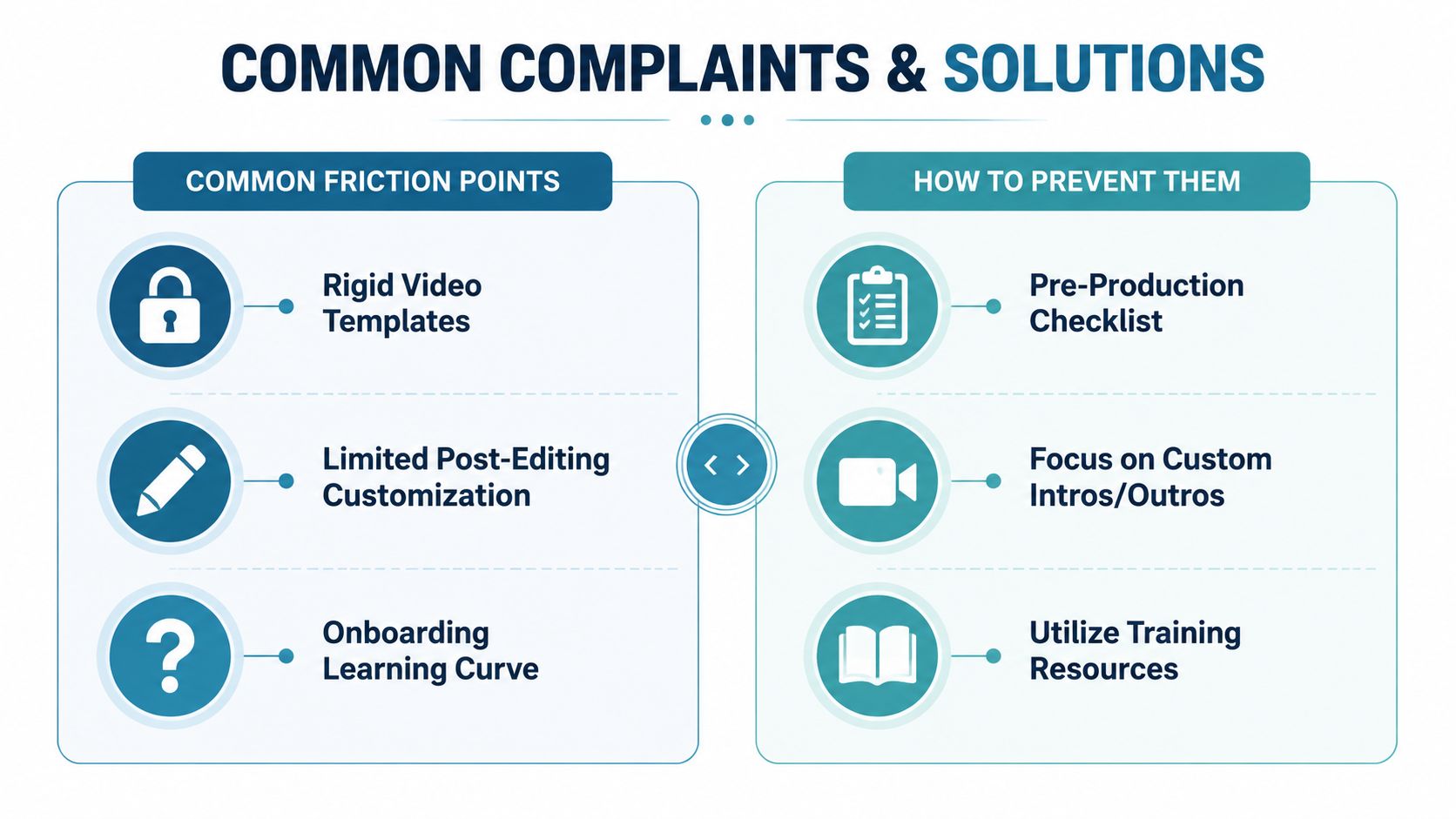
The negative reviews point to a few recurring frustrations. The biggest ones are rigid video templates, limited post-editing once content is generated, billing disputes, a learning curve around the CRM, and weaker fit for agents whose brand depends on longer-form storytelling. None of that is surprising, but all of it matters if you're deciding whether the trial becomes a subscription.
The fix starts before you pay
Most of these issues are predictable if you watch the product closely during the trial. If the generated content already feels too boxed in on day one, it won't magically become more flexible after month two. If the billing flow feels unclear, assume it'll stay that way until you document every step.
Use a simple pre-commitment checklist.
- Review a full week of generated content: Don't judge roomvu off a single sample.
- Test your cancellation path: Make sure you know exactly what happens if you stop.
- Match Voice DNA to your real cadence: If it sounds off, your audience will notice.
- Check CRM deliverability: Confirm that SMS and email follow-ups behave the way you expect.
- Edit the same asset twice: If small changes are awkward, the platform may slow you down.
What the complaints mean in practice
Rigid templates aren't a dealbreaker if your goal is consistency. They are a dealbreaker if you need every post to feel handcrafted. Billing friction is manageable if you're meticulous. It's a problem if you're the kind of operator who signs up fast and reviews statements later.
The CRM point deserves special attention. If you're already using another system for contacts, you may not need roomvu's built-in follow-up layer at all. In that case, treat the CRM as a bonus, not a reason to buy.
How Roomvu Compares to ListingBooster and Other AI Tools
Roomvu is strongest in one lane, always-on video distribution. That is the product's real value. Generic AI writers can move faster on listing descriptions and social captions, while purpose-built real estate platforms like ListingBooster.ai cover a wider workflow that includes listing descriptions, social content, authority content, and Fair Housing compliance scanning.
That difference matters because agents rarely need a single task done well. Some need a tool that turns one listing into a full content set. Others need a system that keeps their name visible in AI search and supports their brand across multiple channels. Those are different problems, and they call for different tools.
The three jobs in a real estate content stack
- Listing Description and Social Copy: Generic AI writers can draft text quickly, but they are usually not built around real estate workflows.
- Always-On Video Distribution: Roomvu has the clearest edge here, because the product is built to automate branded video output.
- Authority Content for SEO: Tools built for real estate visibility have a stronger lane here, especially if you care about consistent expertise content.
ListingBooster.ai is built for the listing-to-authority workflow, while roomvu is built for video momentum. If you want both, layering tools often makes more sense than forcing one platform to cover everything.
The better comparison is not who has the flashiest demo. It is which tool removes the most friction from your actual week. If you want a broader market view, the best AI tools for real estate agents comparison helps you sort tools by job, not by buzzword.
Bottom line: Use roomvu for video volume, use another tool for deeper copy and authority work, and do not expect one subscription to solve every marketing problem.
Your Decision Framework and Next Step
Roomvu is a good buy if you're a video-heavy agent who wants recurring output and can live with template-driven content. It's a weaker buy if you want highly bespoke storytelling, if you dislike workflow constraints, or if you need listing copy and authority content in the same place. The review data backs that up, because the platform's strongest praise and its sharpest criticism both point to fit, not universal quality.
Use the trial like a working audit. Publish a week's worth of content, test the CRM, check how much editing you need, and decide whether the automation supports your cadence or fights it. If you're evaluating broader software options before you commit, compare real estate software options so you can judge roomvu in the context of the rest of your stack, not in isolation.
If you want a cleaner all-in-one workflow for listing descriptions, social content, and AI-search authority, ListingBooster.ai is built for exactly that. It gives agents and teams a purpose-built real estate marketing system with compliance-minded output, and it pairs well with the kind of decision-making this roomvu review should prompt. Visit ListingBooster.ai to see whether it fits your workflow better.
Walk In With the Campaign Already Built
Listing copy, social posts, sourced Market Insights, growth scheduling, and direct publishing after approval from one real-estate-specific system. 25 free credits to start.
Related Posts
 Uncategorized
Real Estate Content Marketing: The 2026 Playbook
Listings with video can generate 49% more qualified leads, according to a 2026 real estate digital marketing roundup. That figure changes the question. Real estate content marketing isn't about how often you post. It's about whether your listing, expertise, and local knowledge can be found, understood, and cited by people and by the AI tools […]
 Uncategorized
AI for Real Estate Marketing: A Practical Playbook
A new listing goes live on Tuesday morning. You write the description from memory, schedule three social posts, answer showing requests, and move on to the next client task. By afternoon, the listing has plenty of activity on your side of the business, but the phone still isn't producing the conversations you expected. That gap […]
 Uncategorized
What Is IDX and Why It Still Matters for Real Estate
A new agent usually hears “IDX” during a brokerage onboarding call, nods along, and hopes nobody asks for a definition. Then the questions arrive: Why are listings appearing on the website? Who controls the data? Why did a property remain visible after its status changed? And will the same pages be readable by ChatGPT, Perplexity, […]