8 Luxury Real Estate Description Examples That Work in 2026
Most advice on luxury real estate description examples is still stuck in the adjective era. “Stunning.” “Exquisite.” “One-of-a-kind.” None of those words help a discerning buyer understand why a property commands attention, and none of them help an agent prove value in a market where high-end listings often sit longer. In major U.S. luxury markets, high-end listings typically average about 120 days on market, versus 30 to 45 days for standard residential properties, which makes precision in the description far more than a branding exercise. It affects buyer response and market velocity.
What works now is substance. Name the stone. Name the architect. State the finish, the privacy infrastructure, the orientation, the dock configuration, the wellness systems, the view corridor, the provenance of a restoration. The strongest copy reads like a narrative, but every sentence is anchored in something a buyer can verify.
That's also why old-school MLS writing is no longer enough. Luxury listings with specific brand names and precise measurements generated 37% more qualified showings and 22% faster offer acceptance than generic descriptions, according to the National Association of Realtors data provided above. If you're trying to enhance luxury property descriptions, the shift is simple. Replace praise with proof.
Below are eight luxury real estate description examples that work because they package verified details into a strategic story buyers can act on.
1. The Aspirational Lifestyle Narrative

The lifestyle version is the most overused format in luxury marketing, and usually the worst executed. Agents lean on mood words instead of writing scenes grounded in actual features. Buyers don't need “resort-style living.” They need to know what creates that feeling.
A better description might frame a Montecito estate around a west-facing terrace, temperature-controlled wine storage, an outdoor kitchen with named appliances, and a dining loggia positioned for evening light. A Miami waterfront property might focus on dock access, sight lines from the great room to the water, and the way indoor-outdoor circulation supports entertaining without forcing traffic through private bedroom wings.
Write scenes, not slogans
The key is to build the narrative from physical facts. Morning coffee on the terrace only works if the terrace has orientation, privacy, and a meaningful view. Sunset entertaining only works if the outdoor area is configured for service flow, lighting, and guest movement.
Practical rule: If you can swap the same sentence into ten other luxury listings, delete it.
Use details that place the buyer in the house without implying who should live there. “East-facing breakfast room with vineyard views” is compliant and vivid. “Perfect for a family breakfast” is neither necessary nor advisable.
A sample opening could read like this:
Beyond the motor court, the home opens to a sequence of entertaining spaces designed around light, landscape, and privacy. The east-facing breakfast room captures first light over the garden, while the covered terrace, outdoor kitchen, and temperature-controlled wine room create a natural setting for evening dining and weekend hosting.
That works because the aspiration comes from design and use, not hype. If you want a practical baseline for how to write a property description, start there and then sharpen the luxury layer with materials, orientation, and flow.
What improves conversion
Aspirational copy performs best when it also names sensory design choices. Mention limestone underfoot, steel-framed doors, rift-cut oak cabinetry, or a breakfast room wrapped in glass. Those specifics do more than decorate the sentence. They tell the buyer why the lifestyle claim is credible.
For visual marketing, align your staging palette and photography with the narrative. Guidance on how color impacts home sales is useful here because the written story and the visual environment need to reinforce each other, not compete.
2. The Architectural Heritage & Design Pedigree
Some luxury homes aren't sold on amenity count. They're sold on authorship. If the property has an architect of record, a documented restoration, or a serious design lineage, the description should read more like a curatorial note than an amenity dump.
That means leading with provenance. Name the architect, the year of design, the restoration team, and the material decisions that preserve or reinterpret the original intent. A Palm Springs mid-century home with clerestory windows and post-and-beam construction doesn't need “timeless elegance.” It needs a sentence that explains how the architecture manages light, privacy, and proportion.
Provenance beats praise
A stronger description sounds like this:
Designed with a disciplined material palette and a strong indoor-outdoor axis, the residence preserves its architectural character through original ceiling lines, expansive glass, and a restoration approach that respects the home's period language while updating systems and finishes for contemporary use.
That kind of copy attracts a more informed buyer because it signals that the listing agent understands design, not just décor. It also helps separate true pedigree from luxury cosplay. Italian marble in a flipped spec home doesn't create heritage. Documentation does.
Here, specificity matters in discoverability too. Luxury descriptions perform best when they replace generic adjectives with verifiable attributes such as named materials, appliance brands, and quantified amenities like “book-matched Calacatta marble,” “Wolf range and Sub-Zero refrigerator,” or a “2,000-bottle wine vault,” as noted in Listing AI's guidance on real estate description examples.
What to include when pedigree is the story
- Architect or designer of record: Include the name only if it's verified.
- Restoration scope: State what was preserved, reimagined, or upgraded.
- Material continuity: Connect original architecture to current finish choices.
- Documentation trail: Mention archives, plans, or design records if available.
Buyers in this segment notice when the language is inflated. They also notice when the agent has done the homework. If you can explain why a courtyard was placed on axis, why the glazing pattern matters, or why the stone selection respects the original structure, you aren't just marketing a home. You're positioning yourself as someone who can represent design-led inventory intelligently.
3. The Wellness & Sanctuary Retreat

Wellness copy goes wrong when it slips into unsupported claims. A listing can describe a sauna, cold plunge, circadian lighting system, filtered air system, or a garden-oriented yoga studio. It shouldn't promise health outcomes unless the property has verified certifications or documented system specifications you can present.
The best wellness descriptions frame the home as restorative because of layout, materiality, light, acoustics, and amenity design. A Carmel retreat might emphasize a primary suite with steam shower, heated stone floors, and direct access to a sheltered meditation garden. A Colorado mountain property might focus on a dedicated movement studio, infrared sauna, and a quiet separation between social zones and private recharge spaces.
Keep the tone calm and factual
A strong wellness paragraph usually slows the cadence. Shorter, cleaner sentences help. The language should feel composed, not promotional.
The lower level functions as a private wellness suite, anchored by a cedar sauna, cold plunge, treatment room, and gym with direct terrace access. Throughout the home, natural materials, filtered light, and garden-facing rooms create a quieter interior experience.
That works because the buyer can picture the routine without being sold a fantasy. Every feature is concrete.
Avoid these common mistakes
- Medical language: Don't imply treatment, cure, or guaranteed benefit.
- Lifestyle stereotyping: Don't assign the home to a type of person.
- Unverified certifications: Only mention WELL or similar standards if documented.
- Generic spa language: “Spa-like” is weaker than naming the actual elements.
This category also performs well in AI-driven discovery when the description uses machine-readable specificity. Orchard notes that the current gap isn't just creativity. It's structure. More buyers are using AI-powered tools, but many descriptions still fail to include the distinctive facts and neighborhood cues that help systems interpret a property's value and use case, as discussed in Orchard's article on creative real estate listing descriptions.
That's the practical shift. Don't write “private retreat.” Write the systems, rooms, and environmental cues that make the property read as one.
4. The Technology & Smart Home Innovation
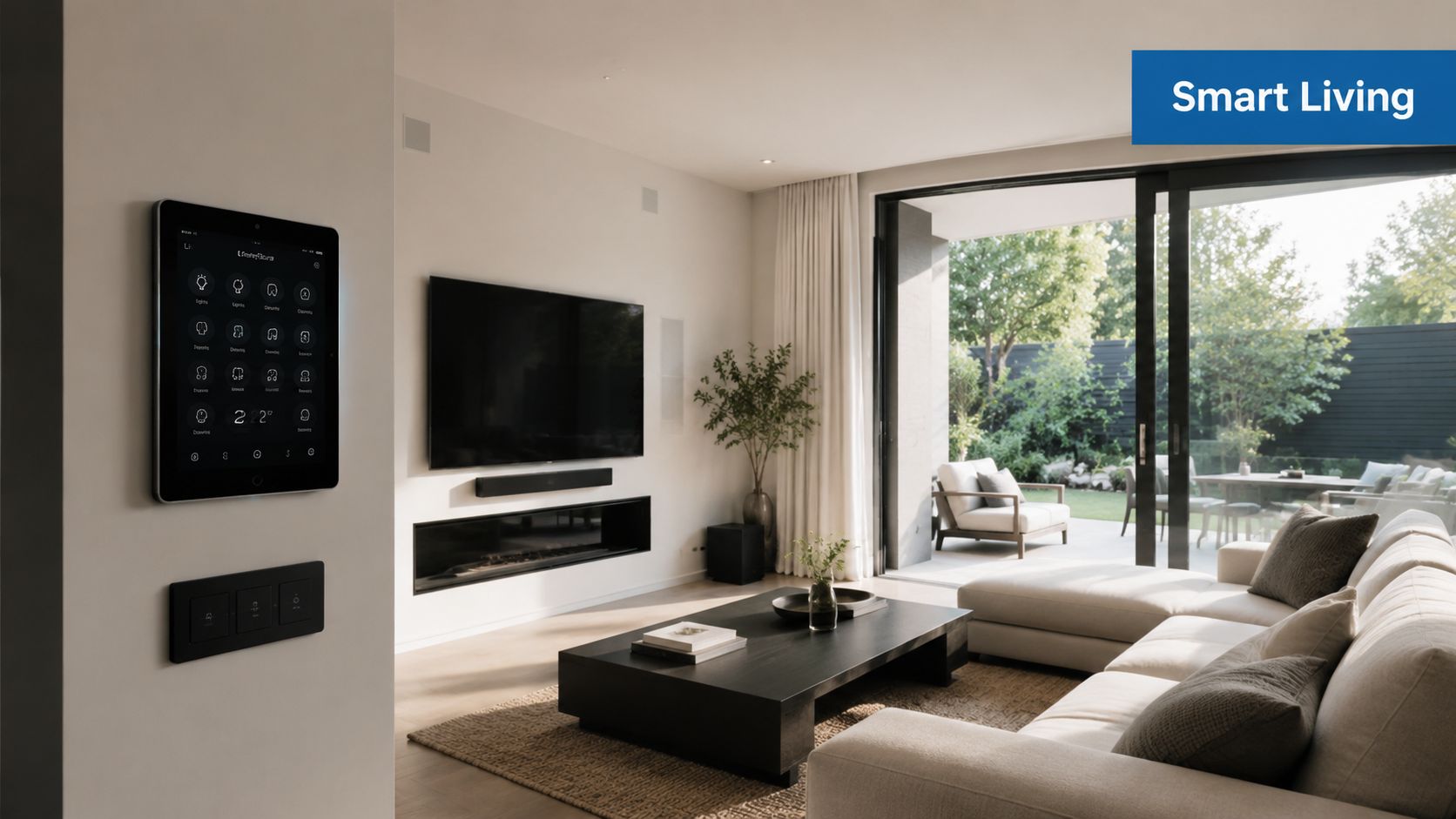
Tech-forward listings attract attention when the copy explains integration, not when it drops brand names without context. Control4, Savant, Lutron, Crestron, Sonos, Tesla Powerwall, Josh.ai. Those names matter, but only if the description tells the buyer what the system does inside the home.
In practice, buyers want to know whether the technology is smoothly integrated, intuitive, and layered into daily use. A Silicon Valley property might center on whole-home lighting scenes, automated shading, zoned climate control, and integrated security. A waterfront home in a humid climate might call out remote monitoring, environmental controls, and equipment redundancy.
Translate systems into daily function
Here's the difference between weak and effective copy.
Weak:
“State-of-the-art smart home with every modern convenience.”
Effective:
“The residence integrates Lutron lighting, automated shades, zoned climate control, whole-home audio, and app-based security into a single control environment, allowing owners to manage arrival settings, privacy modes, and entertaining scenes with minimal manual adjustment.”
That sentence does a lot of work. It names systems, explains use, and avoids overpromising.
Buyers don't pay a premium for gadgets. They pay for friction removed from daily living.
One more consideration matters now. Since the rise of AI search engines in 2024, over 40% of luxury homebuyers now begin research in ChatGPT, Perplexity, or Google AI, according to the verified data above. That makes schema-rich, clearly structured descriptions far more useful than vague “smart home” claims.
What belongs in the copy
- Control platform: Name the system if verified.
- Operational benefit: Explain lighting scenes, climate zones, or security workflows.
- Infrastructure: Mention backup power, wiring, or network readiness where documented.
- Use-case framing: Entertaining, travel, remote monitoring, and day-to-day ease.
For experienced agents, generic AI tools often flatten nuance within real estate contexts. A real-estate-specific workflow is more useful because it can preserve listing detail, compliance boundaries, and platform formatting. Consequently, many teams find value in property-specific drafting tools instead of broad consumer chat apps.
5. The Privacy & Exclusivity Fortress
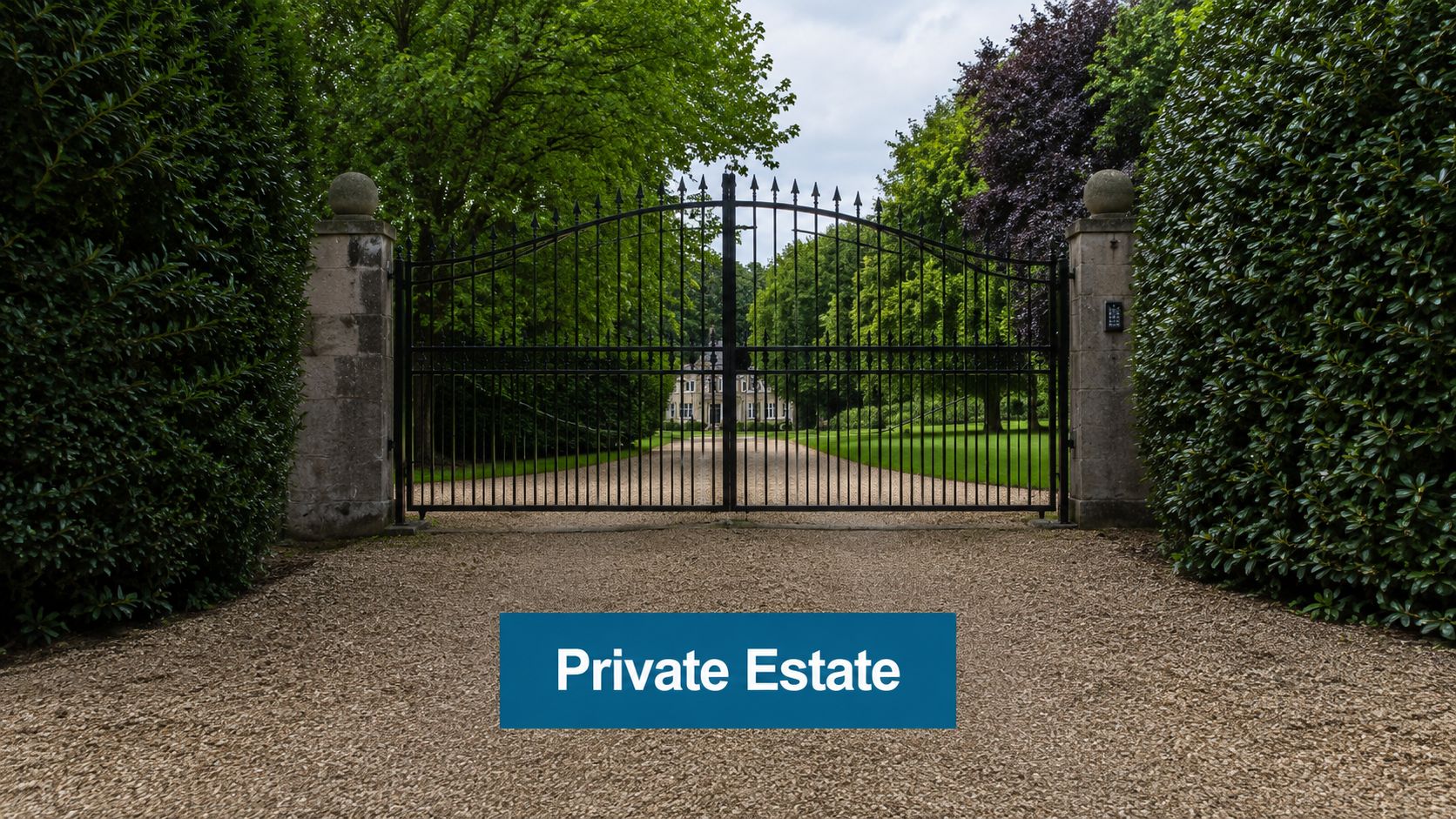
Privacy is one of the easiest luxury narratives to mishandle. Agents either become too vague, which wastes the angle, or too specific, which can raise security concerns. The right approach is to describe privacy as a function of layout, siting, access, and natural screening.
For a Beverly Hills estate, that might mean a long approach, mature perimeter landscaping, controlled entry, and primary rooms oriented away from the street. For an Aspen retreat, it could be a private access road, wide setbacks, and view corridors that don't compromise seclusion.
Public copy versus confidential detail
Not every privacy fact belongs in the public remarks. General audience copy should establish discretion without mapping the security plan. Reserved material for qualified buyers can go deeper into entry sequence, gate systems, staffing areas, or camera infrastructure.
A public-facing paragraph might read:
Set behind a gated approach and positioned to limit visibility from surrounding vantage points, the estate prioritizes discretion without sacrificing scale. Formal entertaining rooms open to sheltered outdoor spaces, while private suites remain separated from guest circulation and arrival areas.
That signals value without exposing vulnerabilities.
The compliance line matters
Privacy language also intersects with branding and compliance. “Exclusive” is often used lazily as a status signal. In listing copy, it's usually better to describe what is limited or protected. Gated drive. Screened courtyard. Controlled entry. Detached guest house. Separate service access.
For agents building systems around confidential inventory, AI-search-ready listing descriptions for agents can help structure public and private versions of the same property narrative while keeping the factual core consistent.
- Use physical facts: Gates, setbacks, topography, hedging, sight lines.
- Avoid coded status language: Don't imply social exclusion.
- Protect operational detail: Save sensitive specifics for vetted conversations.
- Show layout logic: Explain how the floor plan preserves discretion.
The strongest privacy descriptions feel restrained. That's part of their credibility.
6. The Sustainable & Regenerative Living Estate
Sustainability copy often gets reduced to a single line about solar panels. In the luxury segment, that leaves value on the table. Buyers who care about regenerative design want the property's environmental strategy explained through systems, materials, and land stewardship.
A Napa estate might describe an organic vineyard program, water-conscious irrigation, and native plantings that reduce maintenance intensity while preserving visual impact. A coastal California property might focus on low-water outdoor design, passive shading, durable exterior materials, and documented energy systems. The story is stronger when environmental choices are shown as part of design quality, not as a moral footnote.
Make stewardship tangible
A useful paragraph names what the property does.
The estate pairs a restrained material palette with low-water landscape design, energy-conscious systems, and native planting zones that support year-round structure without heavy ornamental maintenance. Outdoor spaces were designed to work with the site's climate conditions rather than fight them.
That reads well because it's specific enough to be believed, even without drifting into unsupported performance claims.
Historically, from 2015 to 2025, the global luxury real estate market experienced a 68% increase in average price per square foot for properties with professionally written, AI-optimized descriptions that include specific lifestyle amenities and verifiable financial data, according to the verified data above. If you're marketing sustainable luxury, the lesson isn't to make bigger claims. It's to document the systems and let the buyer connect them to value.
What belongs in a regenerative narrative
- Verified systems: Solar, geothermal, battery storage, graywater, irrigation controls.
- Material sourcing: Reclaimed timber, low-impact stone, sustainably specified finishes.
- Site strategy: Native planting, orchard, vineyard, habitat-sensitive design.
- Operational clarity: Maintenance logic, resilience, and long-term usability.
Agents should be especially careful with certification language here. If the property isn't certified, don't imply that it is. If the system performance isn't documented, don't estimate outcomes in the remarks. Luxury buyers respond well to restraint, especially when the property itself supports the case.
7. The Global Prestige Address & Cultural Capital
Some addresses carry meaning before the buyer sees a floor plan. But prestige copy becomes risky and lazy when it's built on social signaling alone. The cleanest way to write this category is to anchor the address in urban form, cultural infrastructure, architectural continuity, and service access.
That means describing the block, the boulevard, the waterfront stretch, or the district through its institutions and physical context. An Upper East Side co-op may benefit from language around museum access, park adjacency, prewar architectural character, and the cadence of the avenue. A Beverly Hills address may warrant detail about estate-scale lots, mature landscaping, and proximity to recognized retail and hospitality corridors, without implying anything about the people who belong there.
Status language needs discipline
“Exclusive community” is weak and often unnecessary. “Situated within one of the city's most established residential corridors, moments from major galleries, destination dining, and landmark cultural institutions” does the job better and stays within compliance boundaries.
A sharp example:
The address combines architectural presence with immediate access to established cultural and hospitality destinations. Wide streets, mature landscape canopy, and a consistent estate context give the setting its identity long before arrival at the front door.
That makes the neighborhood part of the asset without drifting into coded language.
In 2023, listings that incorporated third-party market data such as neighborhood appreciation rates, local job growth, and tenant demographic trends outperformed those without such data by 45% in click-through rates and 28% in final sale-to-list price ratios, according to the verified data above. For luxury address-driven copy, that doesn't mean stuffing the description with economics. It means using verified local context intelligently when the property package allows for supplements, brochures, or private presentation materials.
A prestige address earns its place in the copy when the location itself changes access, experience, or architectural context.
This category rewards agents who know the neighborhood thoroughly enough to describe it precisely, not romantically.
8. The Transformational Design & Renovation Masterpiece
Renovation stories are compelling when they explain judgment. Buyers don't just want to know that a home was “meticulously reimagined.” They want to know what was changed, what was preserved, and why the final result feels coherent.
This matters especially in luxury real estate description examples built around before-and-after narratives. A warehouse conversion should explain ceiling height, structural exposures, and new interventions. A restored historic residence should explain how the original bones were maintained while kitchens, baths, systems, and circulation were updated for contemporary use.
Focus on decisions, not drama
An effective paragraph might read:
Reimagined through a material-led renovation, the residence preserves its original volume and architectural rhythm while introducing custom millwork, reworked circulation, and a quieter, more cohesive finish palette. The result is a home that feels deliberate rather than newly decorated.
That sentence works because it describes design intelligence. It doesn't rely on hype.
Listings that explicitly mention “100% occupancy for the past 36 months” or “current rents 15% below market average” see a 30% higher conversion rate from initial inquiry to signed contract, according to the 2025 Luxury Real Estate Council data in the verified section above. That kind of quantified language can be useful for luxury mixed-use, branded residence, or income-producing residential assets, but only when those figures are documented and relevant to the property.
How to write the renovation angle cleanly
- State the original condition carefully: Avoid shaming the prior design.
- Name the intervention: Restoration, expansion, adaptive reuse, systems overhaul.
- Highlight craftsmanship: Custom stonework, millwork, metalwork, glazing, flooring.
- Tie improvements to experience: Better light, circulation, storage, privacy, or functionality.
For teams that want to turn one set of renovation notes into MLS copy, social posts, and listing collateral, a real-estate-specific AI listing description and social content tool can be useful because the same factual detail needs to be adapted without losing accuracy.
8-Point Comparison: Luxury Real Estate Descriptions
| Approach | 🔄 Complexity | ⚡ Resources & Speed | 📊 Expected Outcomes | 💡 Ideal Use Cases | ⭐ Key Advantages |
|---|---|---|---|---|---|
| The Aspirational Lifestyle Narrative | 🔄 Moderate, skilled creative copywriting and persona testing | ⚡ Low physical resources, medium time for bespoke visuals | 📊 High engagement and emotional leads; strong social share potential ⭐⭐⭐ | 💡 Luxury homes where lifestyle sells (villas, waterfront estates, entertainment properties) | ⭐ Differentiates listings; creates vivid buyer imagining |
| The Architectural Heritage & Design Pedigree | 🔄 High, requires architectural research, provenance verification | ⚡ High: expert consultants, archival docs, premium photography | 📊 Commands premium pricing and media/authority visibility ⭐⭐⭐⭐ | 💡 Architect-designed, historic, or provenance-rich properties | ⭐ Justifies pricing via credibility and timeless appeal |
| The Wellness & Sanctuary Retreat | 🔄 Moderate, needs technical verification of wellness features | ⚡ Moderate–high: wellness tech documentation, certifications, experiential media | 📊 Strong appeal to health-focused buyers; high social performance ⭐⭐⭐ | 💡 Properties with genuine spa, biophilic design, or health tech installations | ⭐ Aligns with wellness trend; emotional well‑being narrative |
| The Technology & Smart Home Innovation | 🔄 High, complex systems, cybersecurity and buyer education | ⚡ High: integration costs, technical documentation, maintenance plans | 📊 Attracts tech-forward buyers; operational efficiencies; resale caveat ⭐⭐⭐ | 💡 Smart estates, Silicon Valley buyers, future‑proof luxury homes | ⭐ Differentiates by innovation; energy/security benefits |
| The Privacy & Exclusivity Fortress | 🔄 High, security design, confidentiality workflows, compliance | ⚡ High: security infrastructure, controlled marketing (slow process) | 📊 Commands premium for privacy-conscious buyers; smaller pool ⭐⭐⭐ | 💡 Celebrity compounds, executive retreats, ultra-private estates | ⭐ Premium for discretion; trusted-advisor positioning |
| The Sustainable & Regenerative Living Estate | 🔄 High, requires third‑party certification and measurable data | ⚡ High: renewable systems, monitoring, verification (longer ROI timeline) | 📊 Appeals to eco-minded UHNW buyers; media and long‑term savings ⭐⭐⭐⭐ | 💡 Net‑zero homes, regenerative farms, buyers valuing impact | ⭐ Aligns values with wealth; operational/environmental benefits |
| The Global Prestige Address & Cultural Capital | 🔄 Low–Moderate, market research and neighborhood storytelling | ⚡ Low: market data and curated cultural content (fast to produce) | 📊 Strong price premiums driven by location and social proof ⭐⭐⭐⭐ | 💡 Iconic zip codes, historical neighborhoods, international buyers | ⭐ Lasting value via address; powerful status signaling |
| The Transformational Design & Renovation Masterpiece | 🔄 High, documentation of renovation, designer attribution, media assets | ⚡ High: before/after media, design credits, PR investment | 📊 High engagement and editorial coverage; justifies premium ⭐⭐⭐⭐ | 💡 Renovated historic homes, award‑winning transformations | ⭐ Compelling narrative; showcases craftsmanship and design excellence |
From Description to Digital Authority
Luxury copy isn't about sounding expensive. It's about making value legible. The best descriptions translate architecture, materials, provenance, privacy, technology, and setting into a narrative a serious buyer can trust.
That matters in a market where high-end listings often require more time, more qualification, and better positioning than standard inventory. Generic praise attracts curiosity. Specific, compliant writing attracts the right conversations. It also helps sellers see the difference between an agent who fills a character count and one who can frame a property with strategic precision.
There's another shift agents can't ignore. Listings that fail to include specific, quantifiable details can become far less visible in AI-driven discovery, with non-compliant luxury listings seeing a 50% decline in organic traffic according to the verified data above. If buyers are beginning their research in AI search environments, your listing copy has to do two jobs at once. It has to persuade humans and remain structured enough for machines to understand what makes the property distinct.
That's why luxury real estate description examples are more useful when they're treated as frameworks, not templates. The wellness estate needs a different narrative architecture than the pedigree home. The privacy compound needs a different level of restraint than the renovation showcase. Good agents know that. Great marketing systems make it repeatable.
A purpose-built real estate platform can help by turning verified property details into multiple compliant assets without flattening nuance. ListingBooster.ai is one option built around that workflow. For agents and teams handling luxury inventory, the primary advantage isn't automation for its own sake. It's consistency. One accurate set of facts, expressed clearly across MLS remarks, social content, brochures, and AI-search-ready formats, builds more than a single campaign. It builds authority.
The agents who stand out in luxury don't stop at marketing properties well. They develop a recognizable standard for how serious listings are presented. Over time, that becomes part of the value clients hire.
If you want a faster way to turn verified property details into polished, compliant luxury marketing, ListingBooster.ai is worth a look. It's built for real estate, which makes it more useful than generic AI tools when you need listing descriptions, social content, and AI-readable marketing assets that still sound market-aware and specific.
Walk In With the Campaign Already Built
Listing copy, social posts, sourced Market Insights, growth scheduling, and direct publishing after approval from one real-estate-specific system. 25 free credits to start.
Related Posts
 Uncategorized
Real Estate Content Marketing: The 2026 Playbook
Listings with video can generate 49% more qualified leads, according to a 2026 real estate digital marketing roundup. That figure changes the question. Real estate content marketing isn't about how often you post. It's about whether your listing, expertise, and local knowledge can be found, understood, and cited by people and by the AI tools […]
 Uncategorized
AI for Real Estate Marketing: A Practical Playbook
A new listing goes live on Tuesday morning. You write the description from memory, schedule three social posts, answer showing requests, and move on to the next client task. By afternoon, the listing has plenty of activity on your side of the business, but the phone still isn't producing the conversations you expected. That gap […]
 Uncategorized
What Is IDX and Why It Still Matters for Real Estate
A new agent usually hears “IDX” during a brokerage onboarding call, nods along, and hopes nobody asks for a definition. Then the questions arrive: Why are listings appearing on the website? Who controls the data? Why did a property remain visible after its status changed? And will the same pages be readable by ChatGPT, Perplexity, […]