Listing Presentation Software for Agents: Win More Listings
If you're still walking into listing appointments with a clunky folder stuffed with printed comps, it's time for a serious upgrade. Listing presentation software is no longer a "nice-to-have"—it's the new standard for agents who want to win in a crowded market. It swaps out those static, boring documents for a dynamic, data-rich experience that actually impresses today's sellers.
Why a Polished Presentation Wins More Listings

Let's be honest, today’s homeowners expect a lot more than a simple Comparative Market Analysis (CMA). They want to see a clear, professional marketing plan that proves you know how to sell their home in a world dominated by Zillow, social media, and digital ads. A stack of paper doesn't just look unprepared; it feels completely out of touch.
Your presentation is your first real chance to demonstrate your value. This isn't just about looking tech-savvy for the sake of it. It's about showing a potential client, right from the get-go, that you have a repeatable, strategic process to give their property the spotlight it deserves.
The Pitfalls of "Old School" Presentations
Relying on outdated methods can create friction and plant seeds of doubt before you even start talking. A hastily printed report can scream "last minute," while a generic, one-size-fits-all deck feels impersonal and lazy. The moment a seller asks a question you can't answer because your data is locked on paper, you start losing credibility.
Here’s where traditional methods fall short:
- Stale Data: The information is old the second the printer ink dries. You can't adapt to a new comp that hit the market an hour before your meeting.
- Zero Engagement: Monologuing over a stack of papers is a surefire way to make a client's eyes glaze over. It's a lecture, not a conversation.
- Massive Time Sink: Manually pulling comps, designing pages, and printing everything takes hours you could be spending on lead generation or client follow-up.
The Digital Advantage
This is where sophisticated listing presentation software for agents completely changes the game. Instead of just telling a seller what you're going to do, you can show them. You walk in with a polished, beautifully branded presentation on a tablet or laptop that’s interactive and loaded with live data.
This is more than a simple upgrade—it's a fundamental shift in how you prove your expertise. You’re no longer just a reporter of static facts. You become a strategist, building a winning plan right alongside your client, which builds instant trust.
To see just how big this shift is, let’s compare the old way with the new.
Traditional vs. Modern Listing Presentations
This table breaks down the difference between showing up with a folder and showing up with a modern, digital toolkit.
| Feature | Traditional Method (Static PDF/Print) | Modern Software (Dynamic & AI-Powered) |
|---|---|---|
| First Impression | Can appear dated, disorganized, or generic. | Professional, tech-forward, and branded. |
| Data & Comps | Fixed data, can't be updated on the fly. | Real-time MLS data, interactive maps, and charts. |
| Interactivity | None. A one-way presentation. | Fully interactive; clients can engage with the data. |
| Personalization | Difficult and time-consuming to customize. | Easily personalized for each client in minutes. |
| Follow-Up | A physical leave-behind that gets lost. | Digital link for clients to review and share. |
| Agent's Role | Reporter of information. | Trusted advisor and marketing strategist. |
The difference is night and day. Modern tools allow you to lead a collaborative, value-driven conversation that positions you as the obvious expert in the room.
The industry is already moving in this direction at lightning speed. The market for the MLS listing software that powers these tools was valued at $5 billion in 2025 and is expected to skyrocket to around $14 billion by 2033. This explosion in growth shows that top agents are leaning heavily on better software to craft compelling, data-rich pitches that win over sellers. You can dig deeper into these real estate technology market trends to see where the industry is headed.
Ultimately, a modern presentation proves you’re the right choice. It sets a professional tone for the entire relationship and shows sellers you have the strategy—and the tools—to deliver on your promises.
Evaluating The Features That Actually Matter
When you start shopping for listing presentation software, it's easy to get lost in a sea of sameness. Every platform flashes shiny templates and promises easy CMAs. But honestly, the features that will actually make a difference in your business are rarely the ones they lead with.
To pick the right tool, you have to look past the slick marketing and zero in on the capabilities that save you time, amplify your marketing, and ultimately, put more money in your pocket. Think of it less like buying software and more like hiring a top-notch digital assistant—you want one that's smart, proactive, and genuinely makes your job easier.
Beyond Basic Templates
Sure, every platform has standard templates. That’s table stakes. The best software, however, goes way beyond that. You should be looking for platforms with AI-powered content generation. This is a game-changer. Imagine typing in a property address and getting back well-written MLS remarks, social media captions, and detailed property descriptions—all optimized for Zillow and Redfin. For a busy agent, that feature alone can easily save 10+ hours a week.
Another must-have is truly integrated market analytics. The software should pull real-time data directly from the MLS, not just static, month-old reports. This lets you show sellers live, interactive charts and the absolute latest comps, turning your presentation from a boring report into a dynamic, hands-on strategy session.
Automation and Intelligence Features
The real magic happens with automation that cements your status as the go-to expert. Here are a few non-negotiable features you should look for:
- Schema Markup Integration: This sounds technical, but it's a huge deal. Schema is code that helps search engines like Google understand your listing's content. Software that automatically generates this for you is essentially giving your listings a "VIP pass" to better placement in search results.
- Brand Consistency Controls: This is critical, especially for teams and brokerages. The right tool lets you lock down brand colors, logos, and fonts. That way, every single agent's presentation looks polished and professional, reinforcing the brokerage's brand with every single pitch.
- Fair Housing Compliance Scanners: Protecting your license is everything. Good platforms now include automated scanners that review your AI-generated copy for any words or phrases that could be flagged as discriminatory. It's a simple backstop that can save you from a massive headache.
The goal isn't just to make a pretty presentation. It's to build a complete marketing machine for every listing. The right software handles the grunt work so you can focus on what you do best: connecting with clients and closing deals.
There's a reason the real estate brokerage software market is projected to hit $14.15 billion by 2035—it’s all about these intelligent tools. According to recent market analysis, modern cloud-based systems can boost client engagement by up to 40% by using interactive, AI-driven visuals. For agents, that means more powerful, persuasive presentations. You can read more about the growth of real estate software tools and how it’s changing the game.
When you're evaluating listing presentation software for agents, always focus on the outcome. Does it save you time? Does it make your marketing better? Does it protect your business? The answers will point you to the platform that will become a core part of your success. If you want to see these kinds of advanced features in action, check out our guide on AI-powered tools for real estate agents.
Build a Winning Presentation in 5–10 Minutes
The best listing presentation software gives you incredible power without a steep learning curve. We’ve all been there: you get a call for a last-minute listing appointment, and you need to look like you've been preparing for a week, not scrambling for an hour.
With the right platform, you can actually go from a simple property address to a polished, data-rich presentation in less than ten minutes. I know that sounds like an exaggeration, but it's quickly becoming the new standard for top agents. The whole process is designed to get you out the door fast with a pitch that feels custom and compelling.
It all starts with the property address. You plug that in, and the software’s AI engine gets to work, instantly drafting sharp MLS remarks, a social media rollout plan, and even copy for print flyers. This completely removes the creative guesswork and tedious writing that used to eat up hours of your time.
This diagram shows how the three core elements work together to make this speed possible: smart AI content, real-time market data, and your own brand controls.
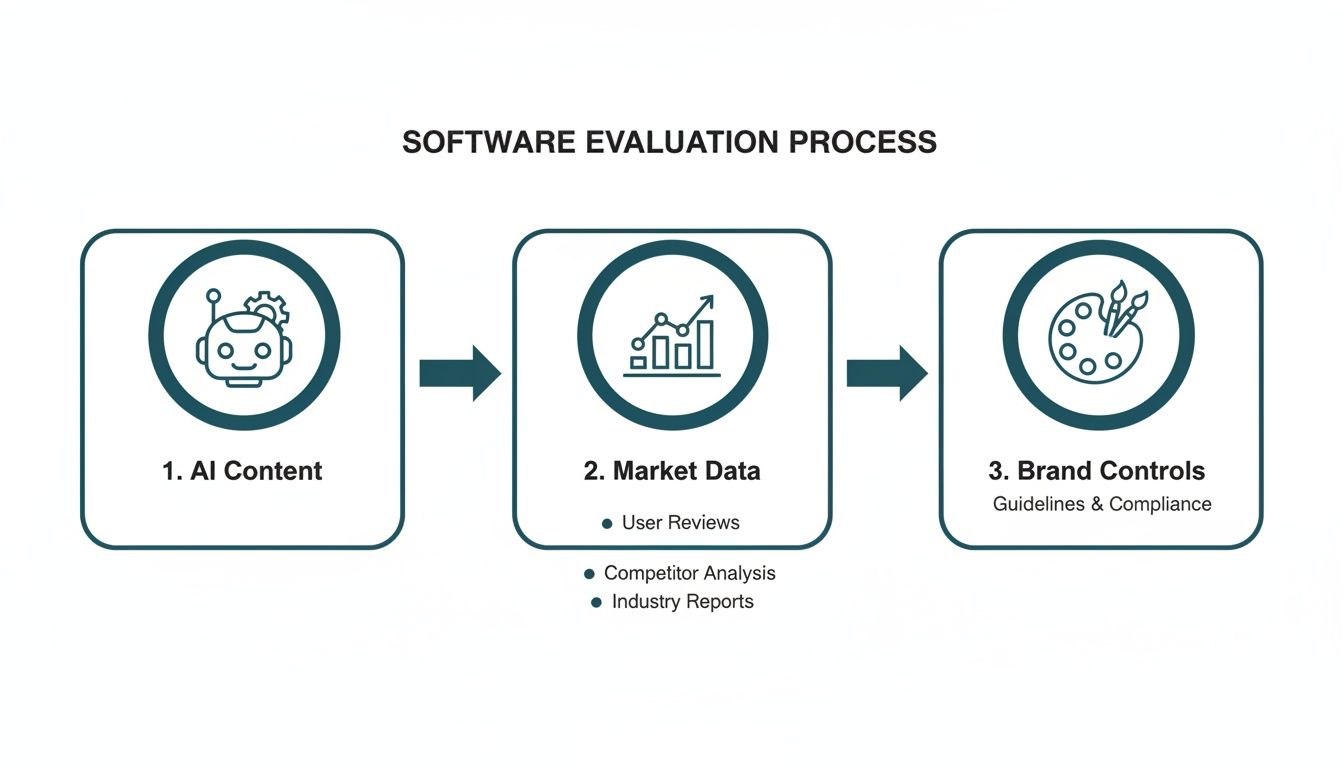
Think of it as a smart system that layers AI-generated marketing copy on top of live data, then wraps it all up in your professional brand identity.
Dial in Your Template and Branding
After the heavy lifting of content generation is done, you get to the fun part: picking a template. Good platforms offer a range of designs, from clean and minimalist to high-end luxury.
But here’s the magic—the moment you choose a template, your branding is automatically applied to every single page. Your logo, headshot, and brand colors are instantly populated, ensuring consistency from start to finish.
This is what elevates your presentation from a generic data dump to a high-impact pitch. It establishes you as a serious professional before you even say a word. The seller sees a cohesive, polished package that screams attention to detail.
The real goal here is to show you just how fast you can create something that genuinely wins business. It's about using the right tools to prove your value from the very first handshake, turning a rushed meeting into a confident, strategic conversation.
A modern dashboard, for example, boils this entire workflow down to a few clicks.
From Data to Done
With your presentation built, you're ready to walk into that appointment. The final output isn't just a static PDF; it's a dynamic, digital-first asset you can present on a tablet, laptop, or even send as a link.
Here's a quick recap of what you can knock out in just a few minutes:
- Input Property Details: Just the address and a few basics.
- Generate AI Content: Get instant MLS remarks, social media posts, and marketing copy.
- Select a Template: Choose a professional design that matches the property and the client.
- Apply Your Brand: Automatically add your logo, colors, and contact info everywhere.
What used to be a frantic, multi-hour scramble is now a simple, almost effortless workflow. You arrive at your appointment not just prepared, but armed with a toolkit that immediately shows why you're the right agent for the job.
Crafting a Narrative That Connects With Sellers
Having powerful listing presentation software for agents gives you a serious edge, but let's be clear: the technology doesn't win the listing—you do. The best agents I know use their software as a storytelling tool, not just a data-dumping machine. It’s your narrative that turns cold, hard facts into a vision a seller can get excited about.
Forget clicking through charts and graphs on autopilot. You need to build a story that taps into their hopes and fears. Remember, they aren't just selling a house; they're closing one chapter and starting another. Your presentation has to show you get that on a deep level.
This means every feature, every statistic, and every marketing plan you show them has to be translated into a direct benefit. You’re the expert guide, confidently explaining how your modern, tech-forward approach gets them exactly what they want: a faster sale for the best possible price.
From Tech Jargon to Tangible Benefits
I see a lot of agents get bogged down explaining the nitty-gritty of their marketing tools. Here's a secret: sellers don't care about the technical details. They just want to know what's in it for them. Your job is to connect the dots.
The easiest way to do this is with simple, powerful analogies. They make sophisticated concepts feel instantly understandable and valuable. This builds trust and positions you as a savvy guide, not some pushy tech salesperson.
Here’s how you can reframe those complex features:
-
Instead of: "Our software generates schema markup for SEO."
-
Try this: "Think of this as a 'VIP guide for Google.' It tells search engines exactly what your home offers, making sure serious buyers find it the moment they start searching online."
-
Instead of: "We use AI to generate marketing descriptions."
-
Try this: "I use a special tool that helps me craft property descriptions proven to get more clicks on sites like Zillow. It means more qualified eyes on your listing from the second it goes live."
That subtle shift in language makes a world of difference. It moves the entire conversation from "here's what my software does" to "here's what I do for you."
The best presentations don't just show data; they interpret it. Your narrative should connect every chart, graph, and marketing plan directly back to the seller's ultimate goal—selling their home successfully and with as little stress as possible.
Scripts That Build Confidence and Trust
Think of your talking points as conversation starters, not a rigid script you have to memorize. They need to sound natural and give you the flexibility to adapt to each client's personality and questions. The goal is to steer the conversation, answer objections before they even come up, and consistently reinforce your value.
Here are a few practical talking points you can weave into your next appointment:
- When presenting the CMA: "The data here gives us a snapshot of where the market is right now. But my strategy isn't just to compete—it's to position your home so it stands out as the clear winner in this price range."
- When showing marketing assets: "As you can see, we don't just list your home; we launch it. I've already drafted this 30-day marketing plan to ensure we build massive momentum from day one."
- When discussing online visibility: "We know over 90% of buyers start their hunt online. That’s why my entire strategy is built from the ground up to make your home look incredible on every single screen, from a tiny phone to a huge desktop."
Each of these points is confident, client-focused, and highlights a clear benefit. You're not just reading off facts; you’re laying out a proven roadmap to success. For even more ideas on this, check out our guide on crafting compelling real estate content that truly resonates with sellers.
Using Demo Assets To Create A Wow Factor

Talking a big game is one thing. Walking into a listing appointment with marketing assets already created for the seller's property? That’s a completely different level of professional. It’s how you instantly stop being just another salesperson and become a proactive marketing partner in their eyes.
The right listing presentation software for agents makes this not only possible but surprisingly easy.
Imagine their reaction when you slide a sample 30-day social media calendar across the table, already filled with eye-catching posts designed to feature their home. You aren't just promising to market their property; you're handing them tangible proof before they’ve even signed on the dotted line.
Demonstrate Your Marketing Prowess
Your goal here is to give them undeniable proof of the value you bring. Let's be honest, most sellers have heard the same old "comprehensive marketing plan" pitch before. You can shatter that skepticism by showing them your specific strategy for their house, right then and there.
Before you head to the appointment, use your software to whip up a few key assets:
- AI-Optimized Property Descriptions: Create a side-by-side comparison. Show them a typical, bland description, and then show them the version your AI tool wrote—one crafted to stop a buyer scrolling on Zillow.
- Sample Social Media Posts: Mock up a few sharp-looking posts for Instagram or Facebook. This immediately proves you know how to reach buyers where they spend their time.
- A Professionally Designed Flyer: Generating a beautiful, custom flyer in just a few clicks shows you’re efficient and have a great eye for detail.
Putting these physical or digital examples in their hands creates a genuine "wow" moment. You’re showing them you've already started working, building a massive amount of trust and setting yourself miles apart from the competition.
This simple prep work completely changes the dynamic of the meeting. You're no longer asking them to imagine what you can do. You're showing them what you've already done. It’s the ultimate confidence-builder for both of you.
Leveraging Technology To Impress
There's a reason the real estate software market hit USD 12.2 billion in 2024 and is on track to hit USD 28.2 billion by 2033. Agents are demanding tools that can pull off this kind of sophisticated marketing. For a deeper dive, you can explore the data on the real estate software market evolution.
For instance, today's cloud-based software, which is now the go-to for 60% of agents, can generate that 30-day content calendar complete with psychology-driven hooks, all while keeping everything Fair Housing compliant.
Presenting these demo assets doesn't just impress a potential client; it educates them on the quality and depth of your process. When you can actually show them a flyer or a content calendar, your marketing strategy suddenly feels real and immediate. This preemptive effort shows a level of commitment that very few agents are willing to demonstrate, and it makes their decision to hire you a whole lot easier.
Tracking Your Success and Refining Your Pitch
So you’ve invested in some solid listing presentation software for agents. That’s a huge first step, but how do you actually know it’s working? The real magic happens when you start looking at the data and continuously tweaking your approach.
Sure, winning more listings is the ultimate goal. But to really understand what's making an impact, you need to track the smaller wins along the way. These are the metrics that tell you if you're on the right track long before you get a signed agreement.
Forget just looking at your overall win/loss record for the year. The most immediate and powerful metric to watch is your appointment-to-listing conversion rate. Think about it: if you were consistently converting 3 out of 10 appointments before and now you're landing 5 out of 10, that’s a crystal-clear sign your new presentation is hitting the mark. It's a direct measure of how well your pitch is connecting with sellers.
Key Performance Indicators to Monitor
To get the full story, you need to look at a few different numbers. Don't just obsess over the final signature; measure the steps that get you there. This is how you spot weak points in your process and fix them.
Here are a few essential metrics I always recommend keeping an eye on:
- Time Spent Per Presentation: How long does it actually take you to create a top-notch presentation from scratch? If your new software cuts that time in half, that’s a massive ROI. That's time you can now spend prospecting or following up with leads.
- Client Engagement Analytics: This is a goldmine. Most modern platforms will show you when a seller opens the digital presentation you sent and, even better, which slides they spent the most time looking at. If you see every seller lingering on your marketing plan slide, you know that's a key selling point to double down on.
- Direct Seller Feedback: You can’t beat old-fashioned feedback. Just ask. After a decision has been made (win or lose), a simple follow-up like, "Was there a particular part of my presentation that you found most helpful?" can give you incredible insights you'll never find in a data report.
When you start tracking these things, your listing presentation stops being a static document and becomes a dynamic tool for growing your business. You stop guessing what sellers care about and start knowing.
A Simple Framework for A/B Testing Your Pitch
Once you have a baseline for your metrics, it's time to start experimenting. Think of yourself as a scientist testing a theory. For your next ten appointments, try making one small, specific change to your presentation and see what happens to your conversion rate.
For example, let's say you want to test two different ways of explaining your marketing plan.
- Group A: Stick with your current detailed, text-heavy slide that outlines every single step.
- Group B: Create a new, highly visual timeline or infographic that shows the seller's marketing journey at a glance.
Show the Group A version to five sellers and the Group B version to another five. Then, compare the conversion rates. You might discover that the visual approach (Group B) results in a 15% higher conversion rate simply because it’s easier for sellers to digest and remember. Boom. That's a data-backed improvement you can now roll out to all your future presentations.
By consistently measuring, testing, and refining, your software becomes more than just a tool—it becomes a strategic asset. It sharpens your skills, boosts your confidence, and drives real, measurable growth for your business.
Frequently Asked Questions
When you're looking into listing presentation software for agents, a few questions always seem to pop up. Let's tackle them head-on, drawing from what I've seen work for agents just like you.
How Much Should I Expect to Pay?
The price tag on these tools can really swing, depending on what you’re getting. You'll find everything from basic template builders to comprehensive AI marketing suites.
The good news is that most of the best cloud-based platforms are well within reach. You're typically looking at a monthly subscription model, often starting around $35 to $50 per agent. This approach avoids a big, scary upfront cost and makes some seriously powerful tech accessible.
The real question isn't just about the cost, but the return. A modest monthly fee that saves you hours of tedious work and helps you land even one extra listing a year? That’s an investment that pays for itself many times over.
Don't forget to look for free trials—they are your best friend for test-driving software before you pull out your credit card. You can explore different real estate software pricing models to get a feel for what aligns with your budget and business needs.
Will This Software Actually Connect to My MLS?
Seamless MLS integration isn't just a "nice-to-have"; it's a must. The top-tier platforms are built to do this effortlessly. They can pull property data directly from an MLS feed or even a simple property URL, instantly populating your presentations, marketing flyers, and analytics.
Think about what that means for your workflow. No more hours spent manually punching in data or double-checking details. This single feature frees you up to focus on what really matters: your client strategy, not your spreadsheets. It ensures every piece of information you present is spot-on accurate.
Can I Make the Presentations Look Like My Brand?
Yes, and you should absolutely demand it. Any platform worth its salt will put branding front and center. Look for the ability to easily upload your logo, plug in your brand's color palette, and add your headshot and contact details to every single thing you create.
This is non-negotiable. Consistent branding across your presentations and marketing materials builds recognition and reinforces your authority. It’s how you go from being just another agent to the agent in your market.
Ready to transform your listing presentations from static reports into deal-winning experiences? See how ListingBooster.ai can help you build a complete marketing suite for your next property in minutes. https://listingbooster.ai
Walk In With the Campaign Already Built
Listing copy, social posts, sourced Market Insights, growth scheduling, and direct publishing after approval from one real-estate-specific system. 25 free credits to start.
Related Posts
 Marketing Strategy
AI Tools for Real Estate Agent Branding and Visibility
Buyers don't discover agents the same way they used to. They still ask friends, scroll portals, and compare websites, but they're also starting their search inside AI interfaces that summarize options, compare local experts, and recommend who looks credible online. That shift changes the job of marketing. It's no longer enough to publish a few […]
 Marketing Strategy
Real Estate Marketing Command Center for Agents: Your Guide
Agents used to think of marketing as a visibility problem. Post often, run a few ads, stay active on Instagram, and keep your CRM reasonably organized. That old playbook is breaking down. A real estate marketing command center for agents solves a different problem. It doesn't just help you publish. It helps you run marketing, […]
 Marketing Strategy
Real Estate Agent Authority Building with Content: AI Guide
More than 40% of homebuyers now start their search in AI systems like ChatGPT and Perplexity rather than traditional search engines, which changes what “visibility” means for every agent trying to build a pipeline today (Agent Elite). If your content only works on social feeds or only ranks in traditional search, you're missing a growing […]